Kincsem Park
Horse racing has a long and rich history in Hungary, dating back to the early 1800s. The introduction of horse racing is attributed to Count István Széchenyi, one of the greatest statesmen in the country's history, who recognized its positive influence on social interactions and urbanization during his trip to England in 1815. The first horse race took place in 1827 under the organization of the Horse Breeders' Association, whose founders were well acquainted with Széchenyi. The four-day event achieved tremendous success, with over 25,000 people in attendance.
The golden age of horse racing spanned between the 1870s and the outbreak of WWII, during which decades the races were attended by a broad segment of society. Kincsem Park was officially inaugurated at the peak of this era on June 30, 1925. Named after the legendary Hungarian racehorse Kincsem, who achieved unparalleled success in the late 19th century, the park was established as a tribute to her career.
During the turbulent years of the mid-20th century, economic difficulties and political changes brought uncertainty, but the park persevered, adapting to changing times. In addition to horse racing, the facility evolved into a cultural hub. It hosted various cultural events, including concerts and exhibitions, which contributed to its significance as a gathering place in Budapest. Today, the venue is a symbol of resilience and endurance. It has undergone modernization and renovation, and remains a vibrant and relevant destination for both horse racing enthusiasts and the wider public.
This photo series is focusing on the races and the sequence of activities that take place both on and off the track and serves as a tribute to the art and beauty of horse racing in Hungary, as well as to the dedicated individuals who make it all possible.
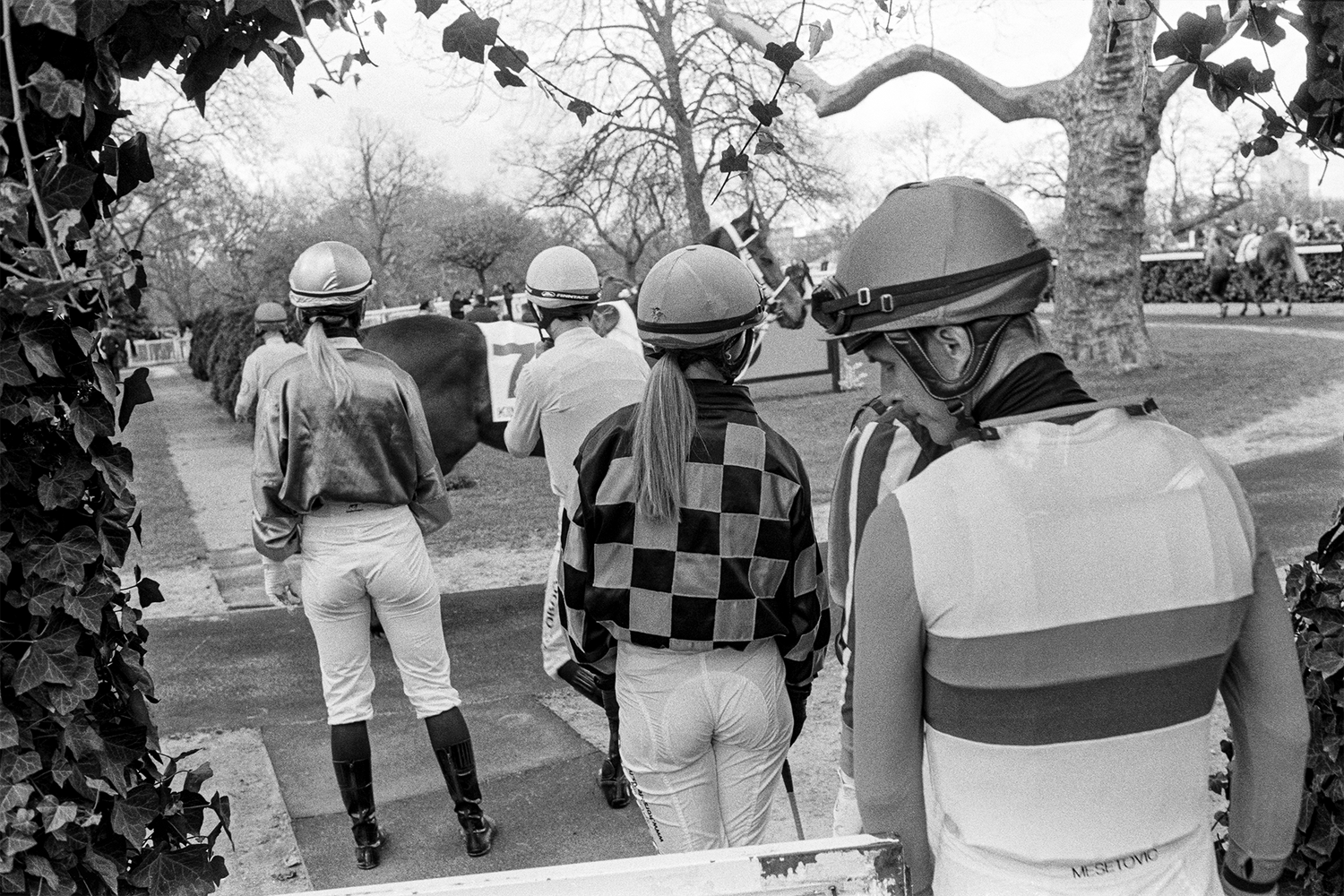
Jockeys Csenge Suták, Martin Laube, Vivien Mocsinka and Goran Mesetovic (left to right) at the entrance of the parade ring after they left the weighing room. Weighing is a fundamental part of horse racing that ensures the integrity of the sport from start to finish. Once weighed out, the saddles are handed over to the trainers or the trainers’ assistant to saddle up the horses. Typically, the jockeys arrive in the parade ring about 10 minutes before the race.
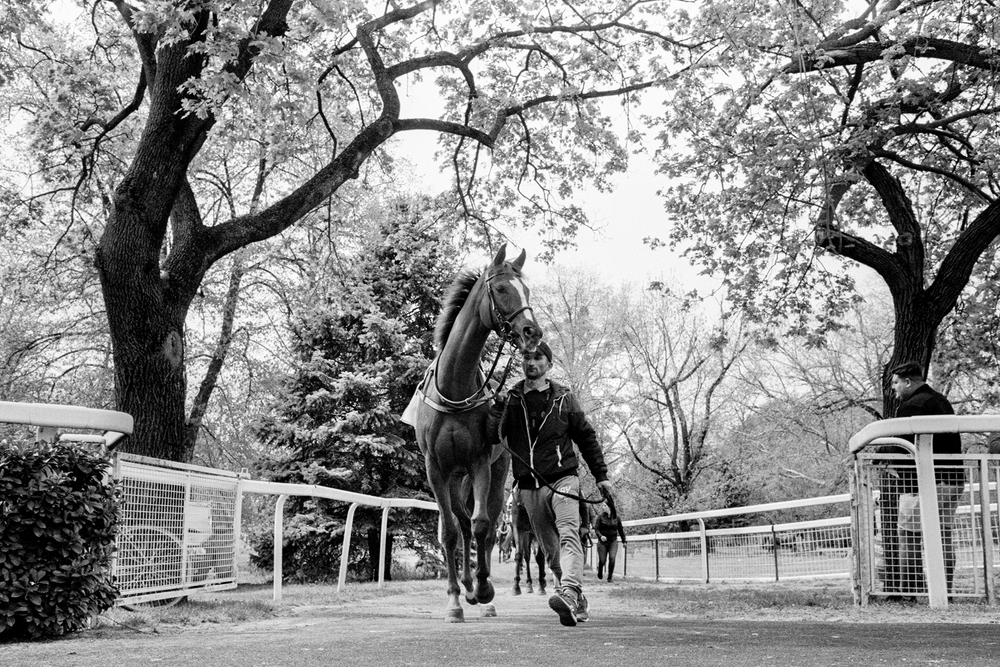
The horses, already saddled, are brought from their stables and led by their grooms. Walking allows the horses to warm up their muscles and joints, preparing them for the physical demands of the race and reducing the risk of injury.
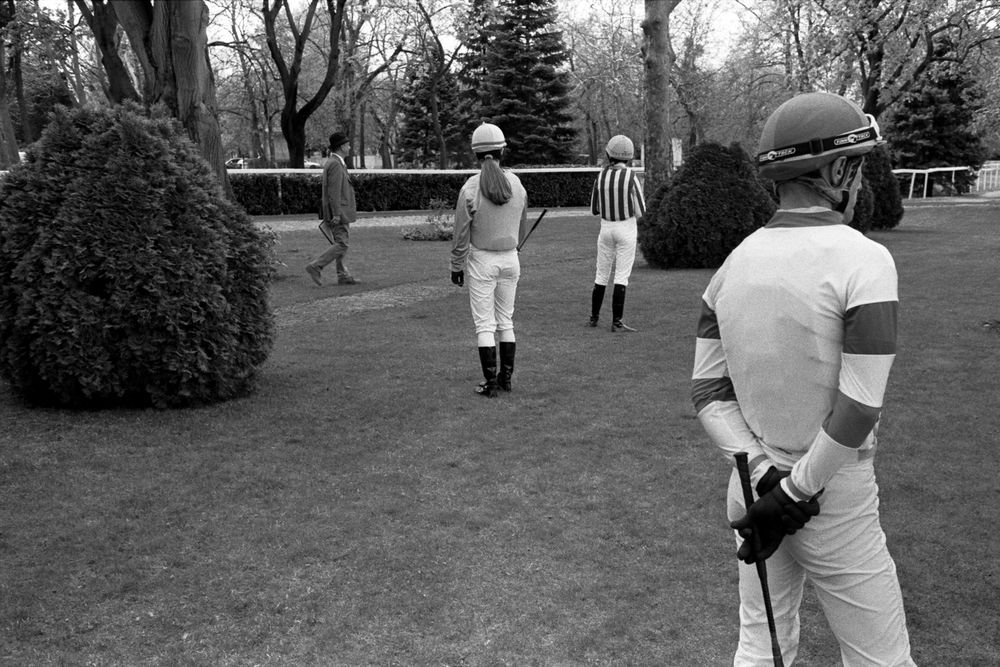
Jockeys Ramóna Fézer, Renáta Kiss and Lajos Fejes (left to right) in the parade ring, moments before they meet the horses' owners and discuss last-minute tactics with the trainers.
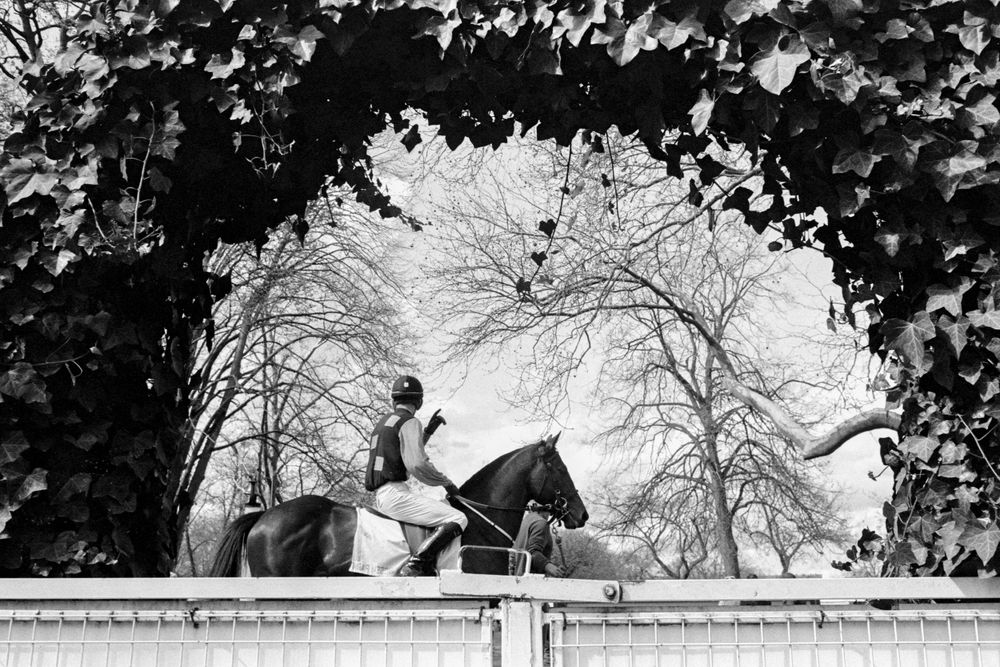
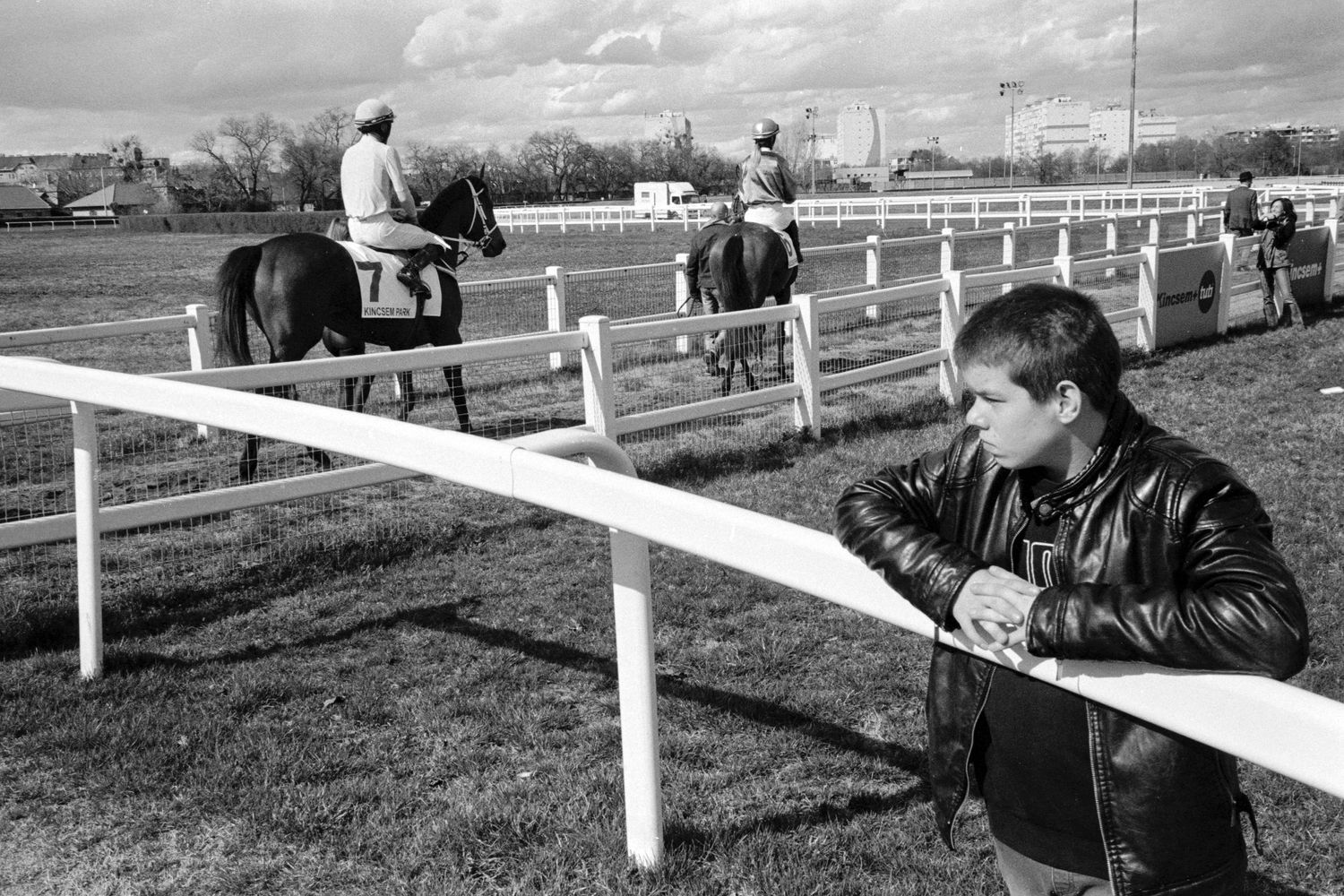
Traditionally, a bell serves as the signal for the jockeys to mount the horses and parade in front of racegoers before they leave for the track, allowing the visitors to see the horses up close right before the race to assess their fitness and attitude.
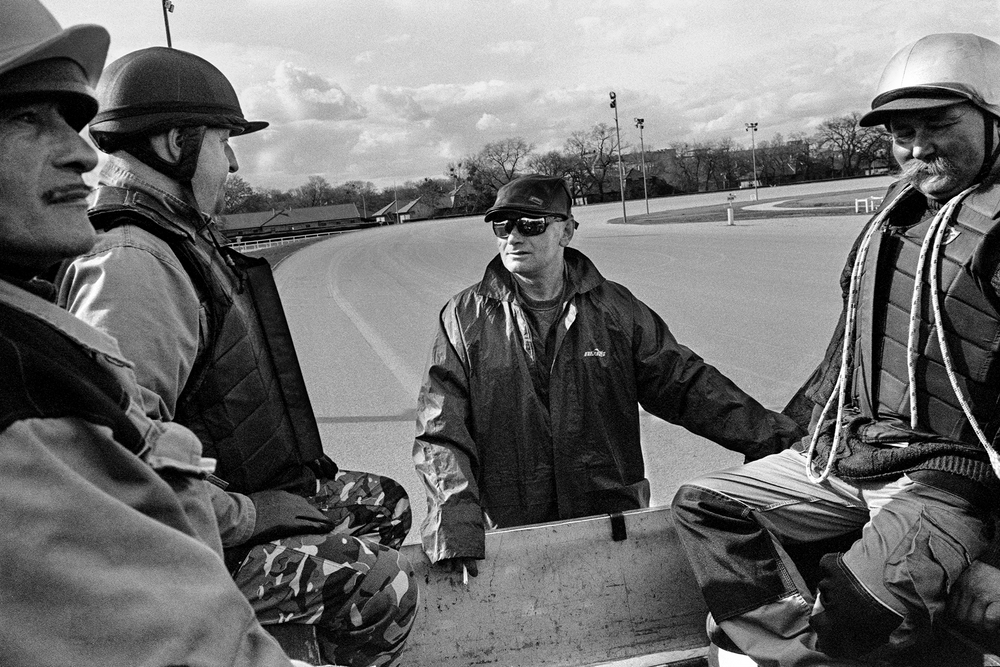
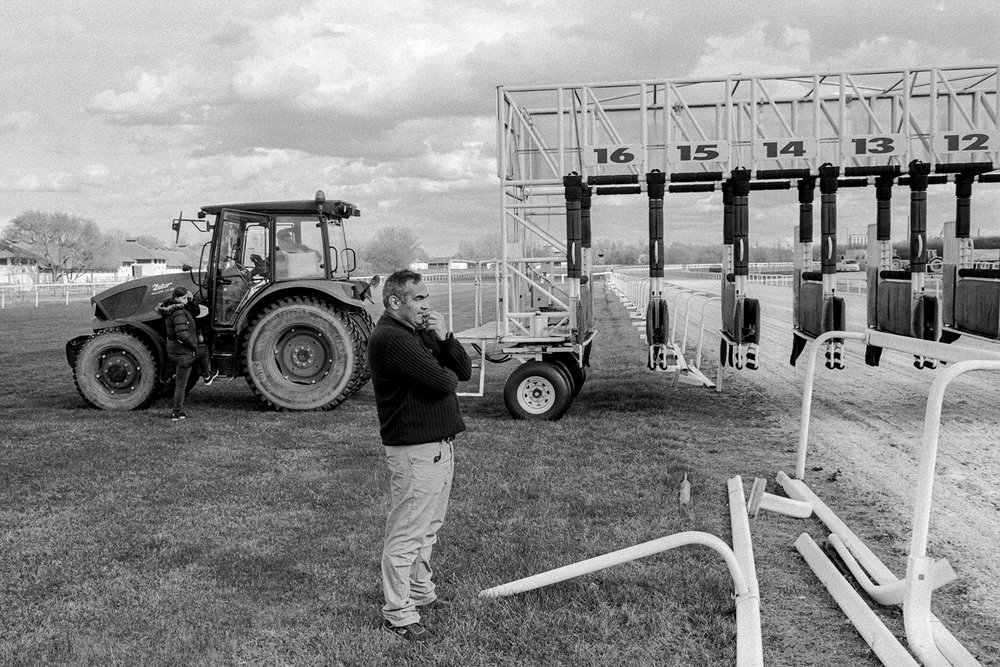
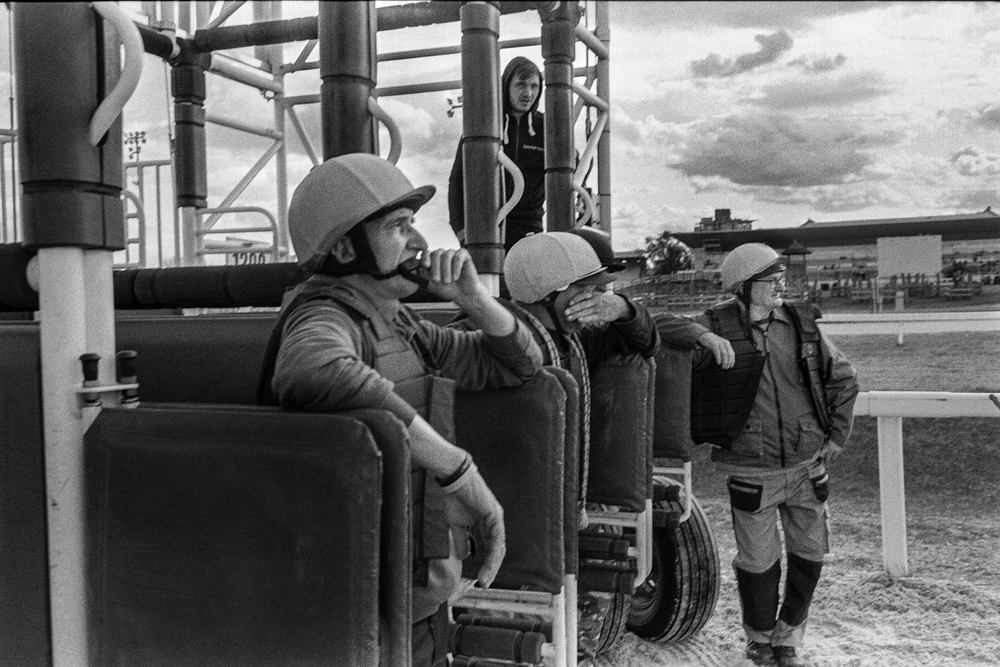
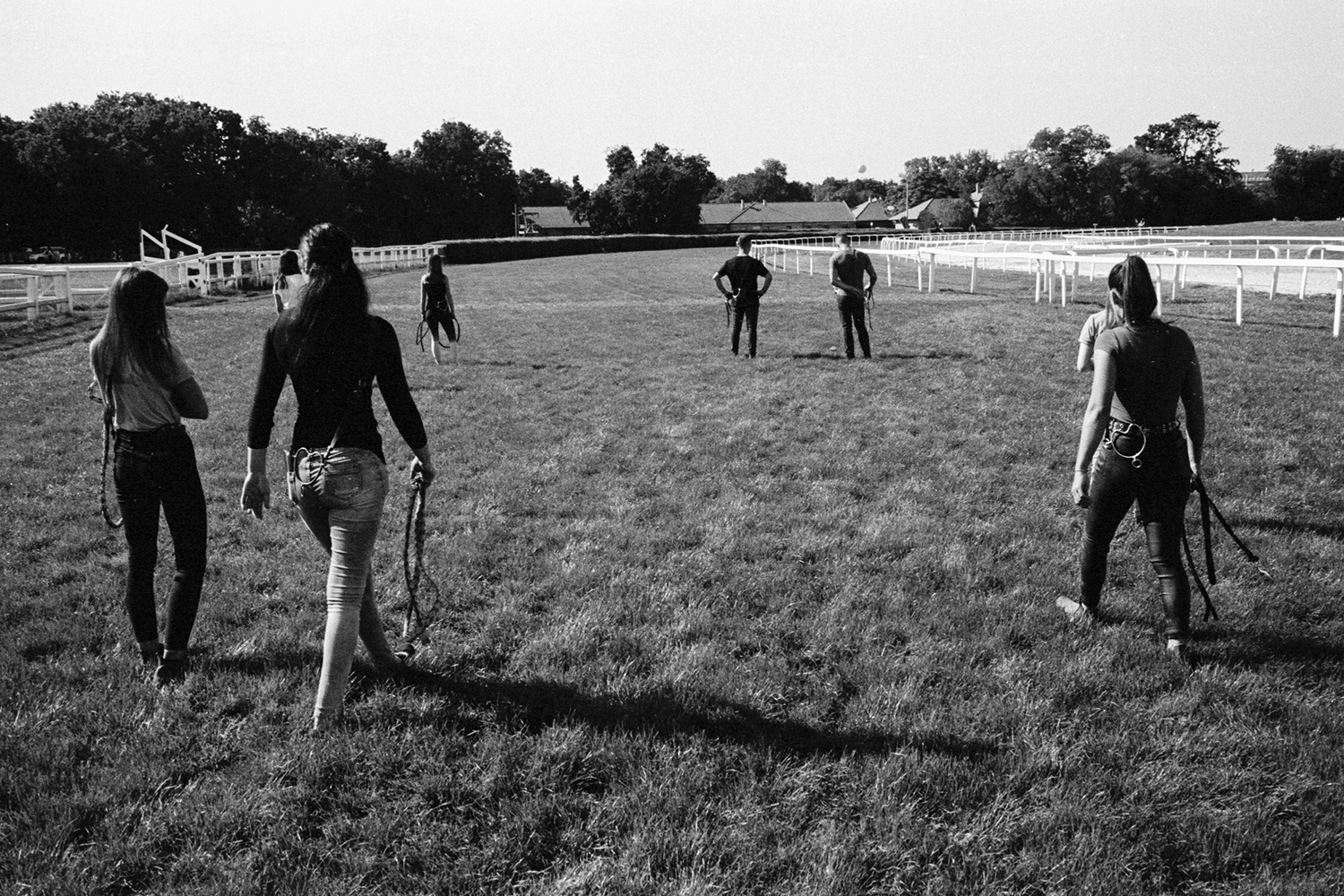
After the jockeys left for the racecourse, the gate crew jumps on a truck and head out to the starting gate. The gate crew consists of the starter and the assistant starters. (left to right: József Schlagetter, István Cseresznye, Ferenc Tarr, Koppány Lévai)
The starting gate - often set up on the opposite side of the track - is equipped with stalls aligned in a raw. The structure is designed to be towed behind a tractor or truck, so that it can be moved about on the racetrack grounds.
By the time the race is due, the assistant starters already know if a horse is nervous, needs more time to load or requires special handling. (left to right: Ferenc Opálka, Koppány Lévai, Zsolt Lőrincz (standing on the gate) and János Iglódi)
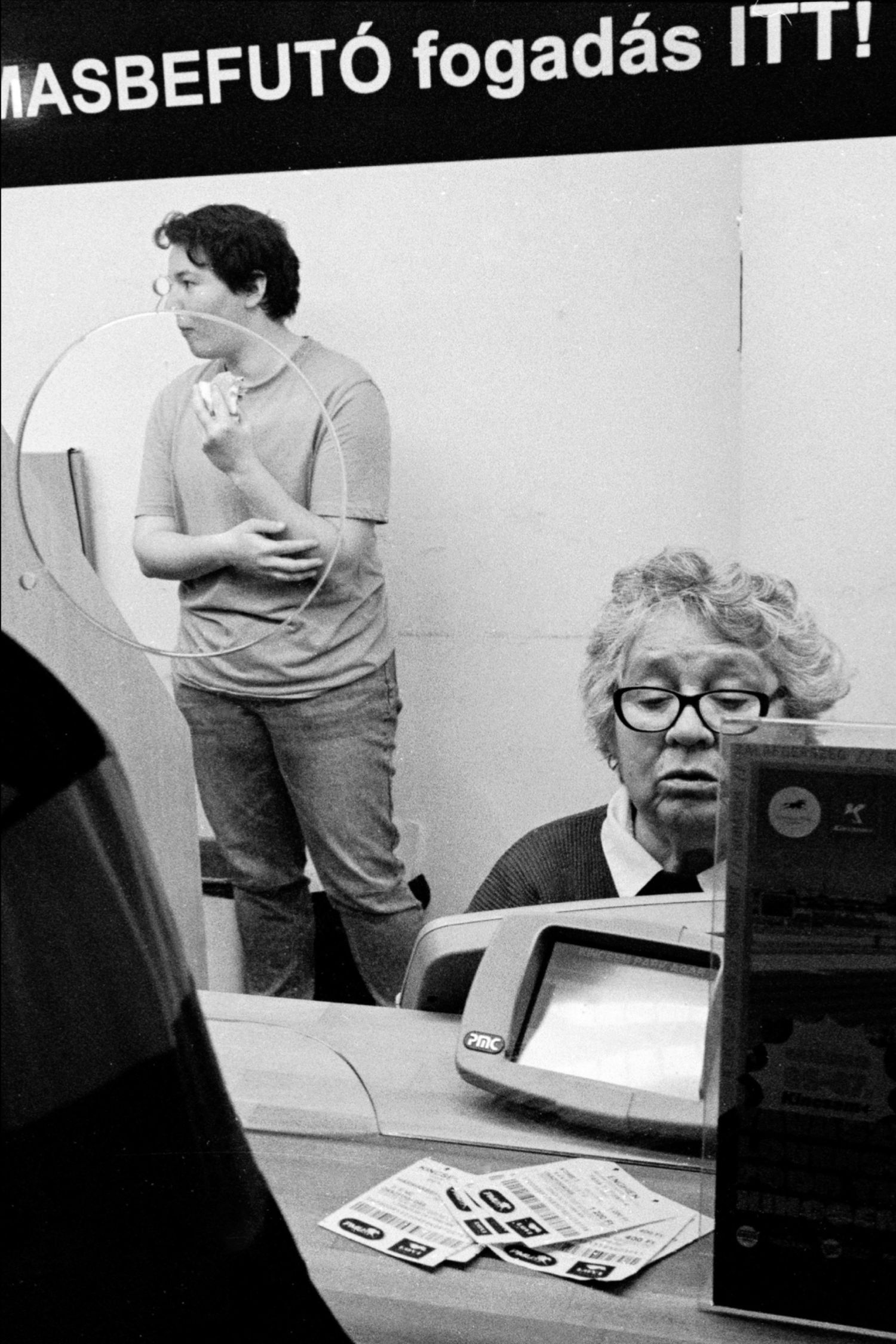
Horse racing employs a pari-mutuel wagering system, where the organizer pools all wagers, keeps a percentage (a.k.a. the takeout), and pays the winners with the collected bets. The wagers are betting against all the other players. The more money placed on the same horse to win, the lower the payout for that winning bet would be.
There are two major betting types: straight and exotic bets. Straight bet is a win, place, or show. It is the simplest wager to make by betting on a single horse in one race. Exotic bets involve betting on more than one horse, either in a single race, or multiple races.
Jockey Ádám Benkő and assistant starters József Schlagetter, Lajos Hajdi, Zoltán Vida, Ferenc Simon, László Pál, Ferenc Opálka (left to right) at the starting gate. The crucial responsibility of assistant starters lies in minimizing safety risks at the starting gate. After the horses are positioned, it is their duty to ensure that each horse's feet are firmly planted and their head is aligned straight before the gates open.
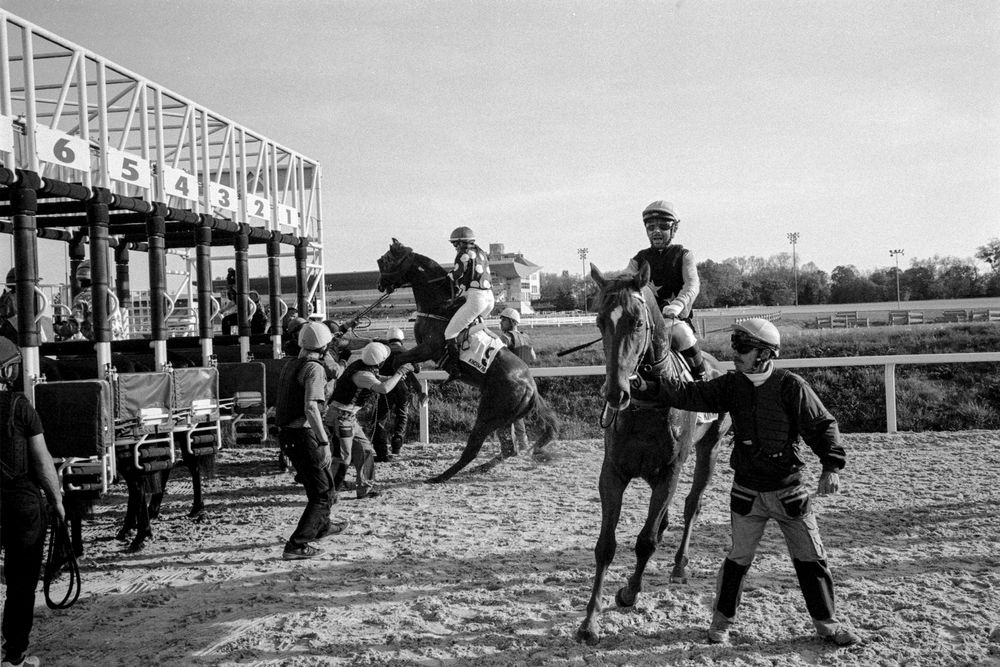
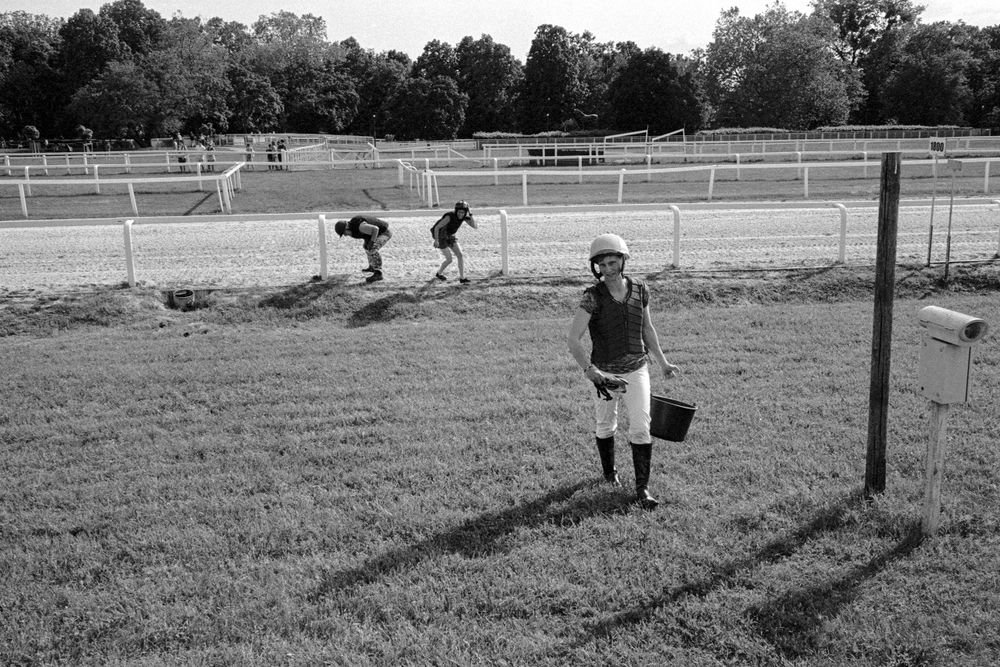
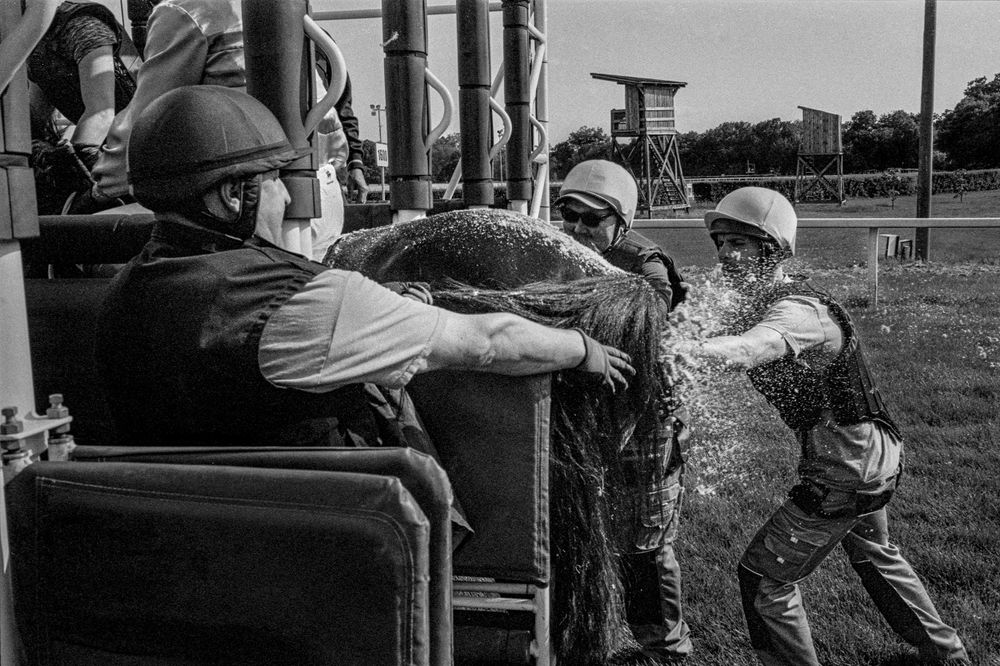
Sometimes, selected tactics are employed to facilitate the positioning of the horses. One of these is to sprinkle sand from behind the horse to encourage it to move forward towards its starting positon.
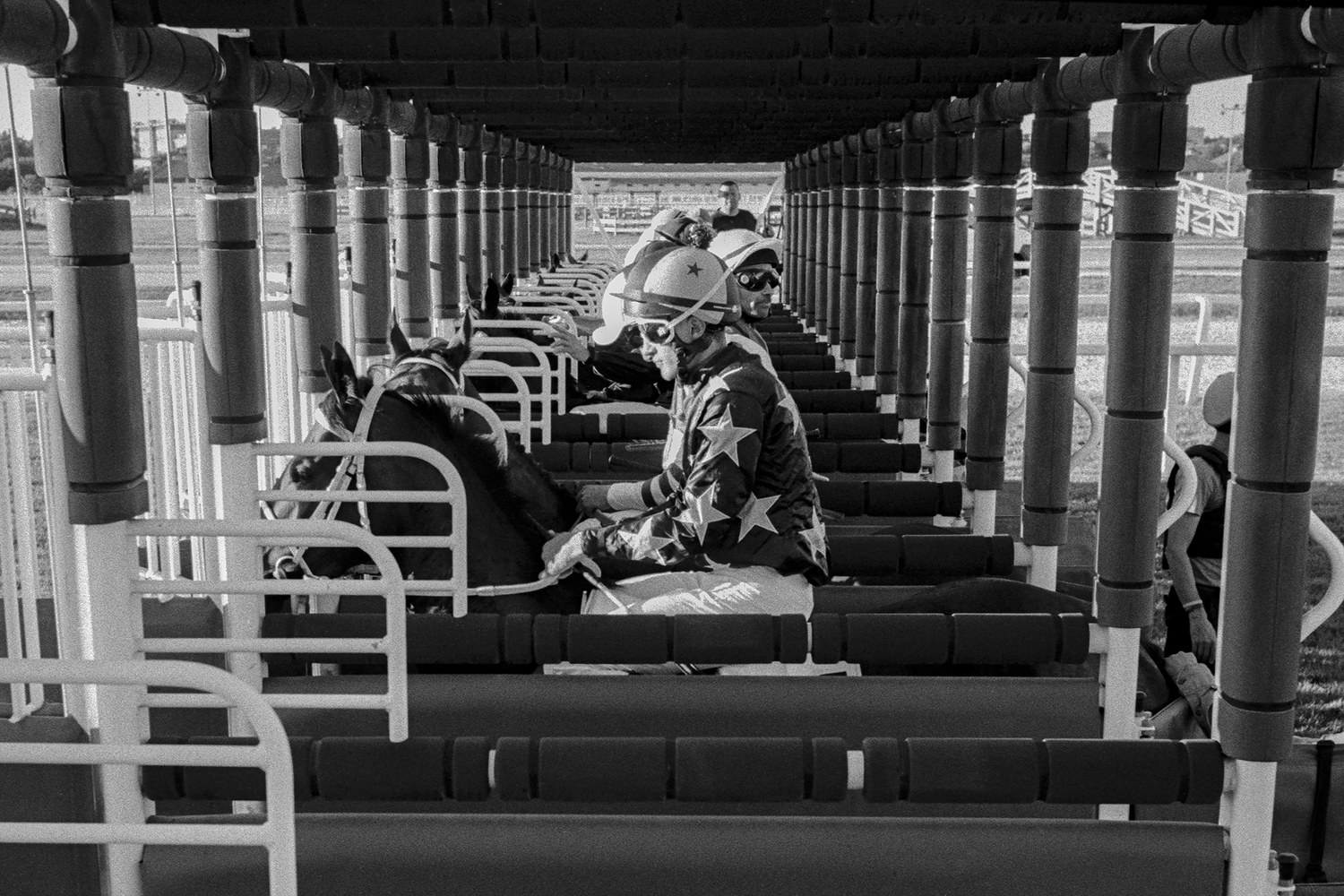
The limited space within the gate poses a challenge for both horse and rider, as the horses can easily become restless. This is a primary reason why jockeys require assistance to maintain their horses' head position without aid.
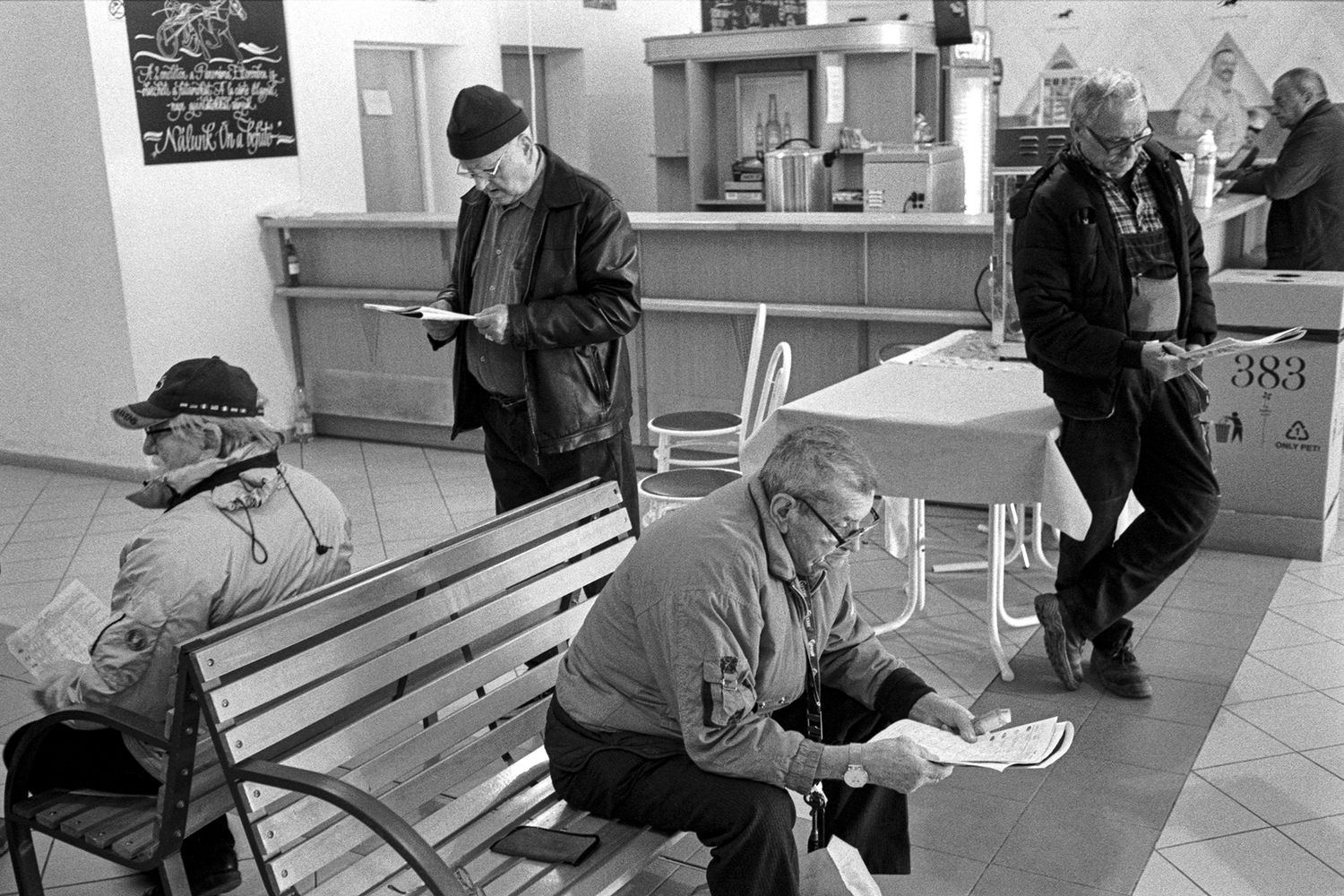
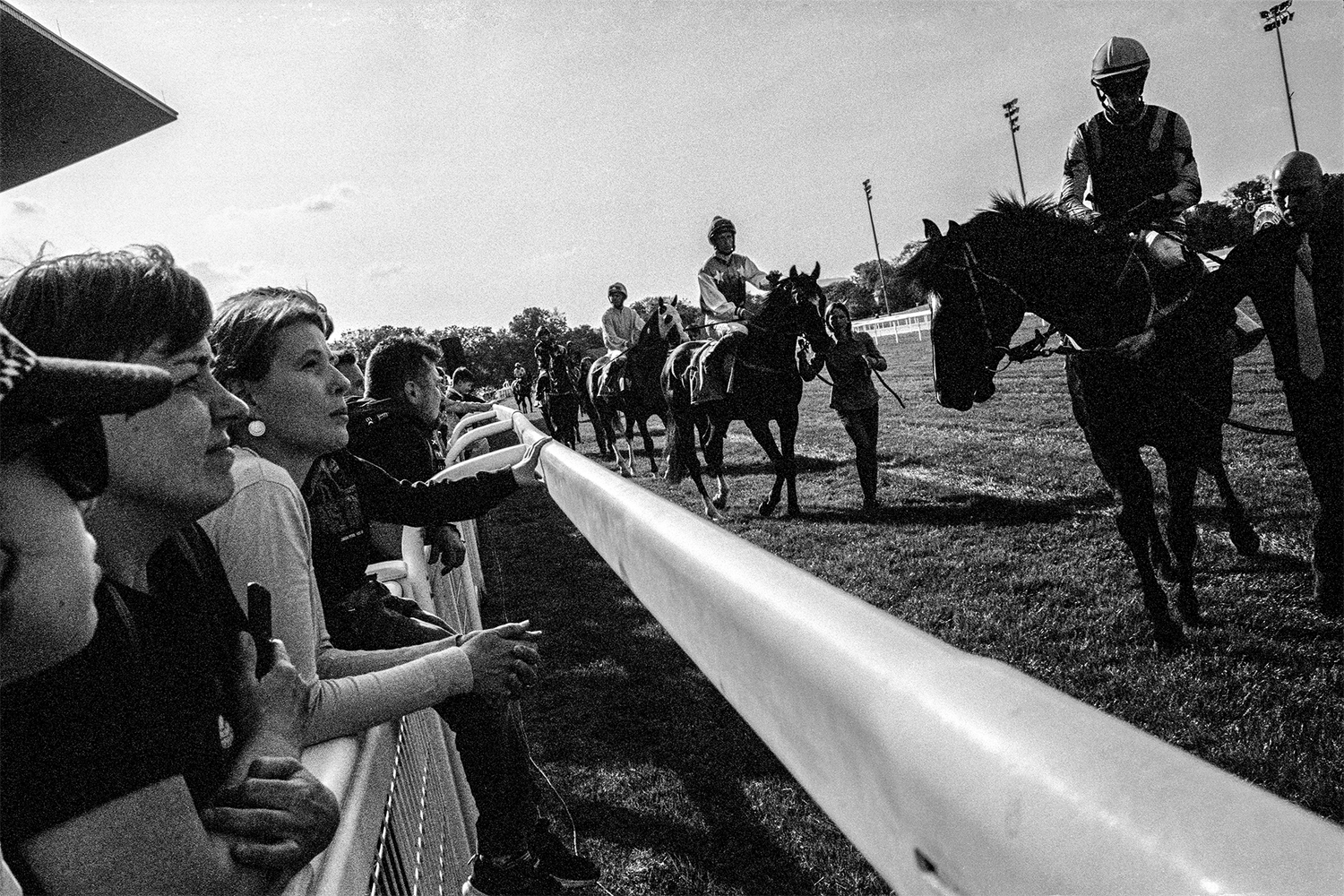
Racegoers plan their upcoming wagers by engaging in a comprehensive analysis of the racing form. This resource encompasses a wealth of information, including details about the participating horses, jockeys, trainers, owners and past performances. By studying these factors, racegoers can make informed decisions when placing their bets.
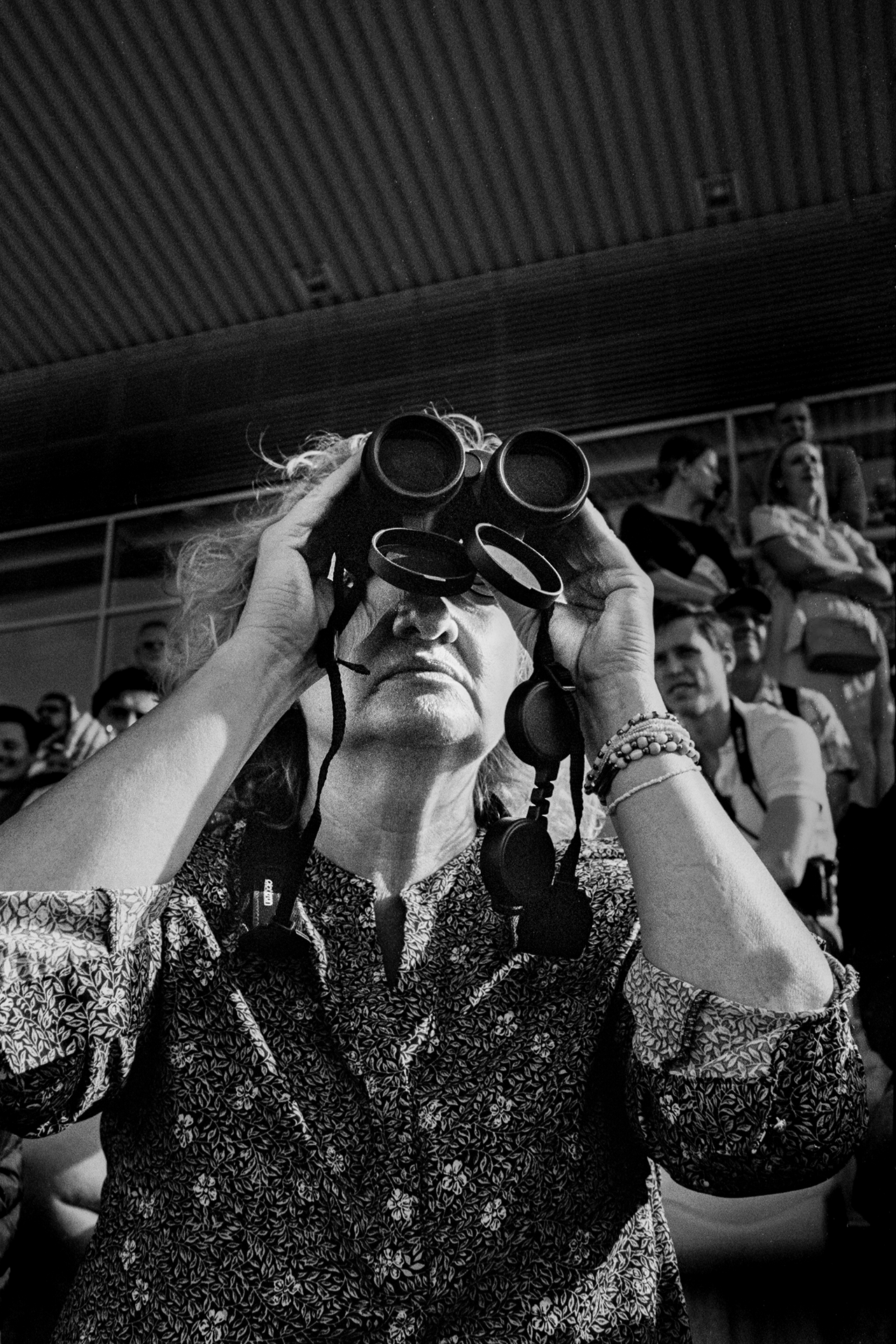
In the most prestigious horse races, due to the significant number of racegoers, horses are often called to parade once again, this time right in front of the grandstand, thereby enhancing further the splendor of the event.
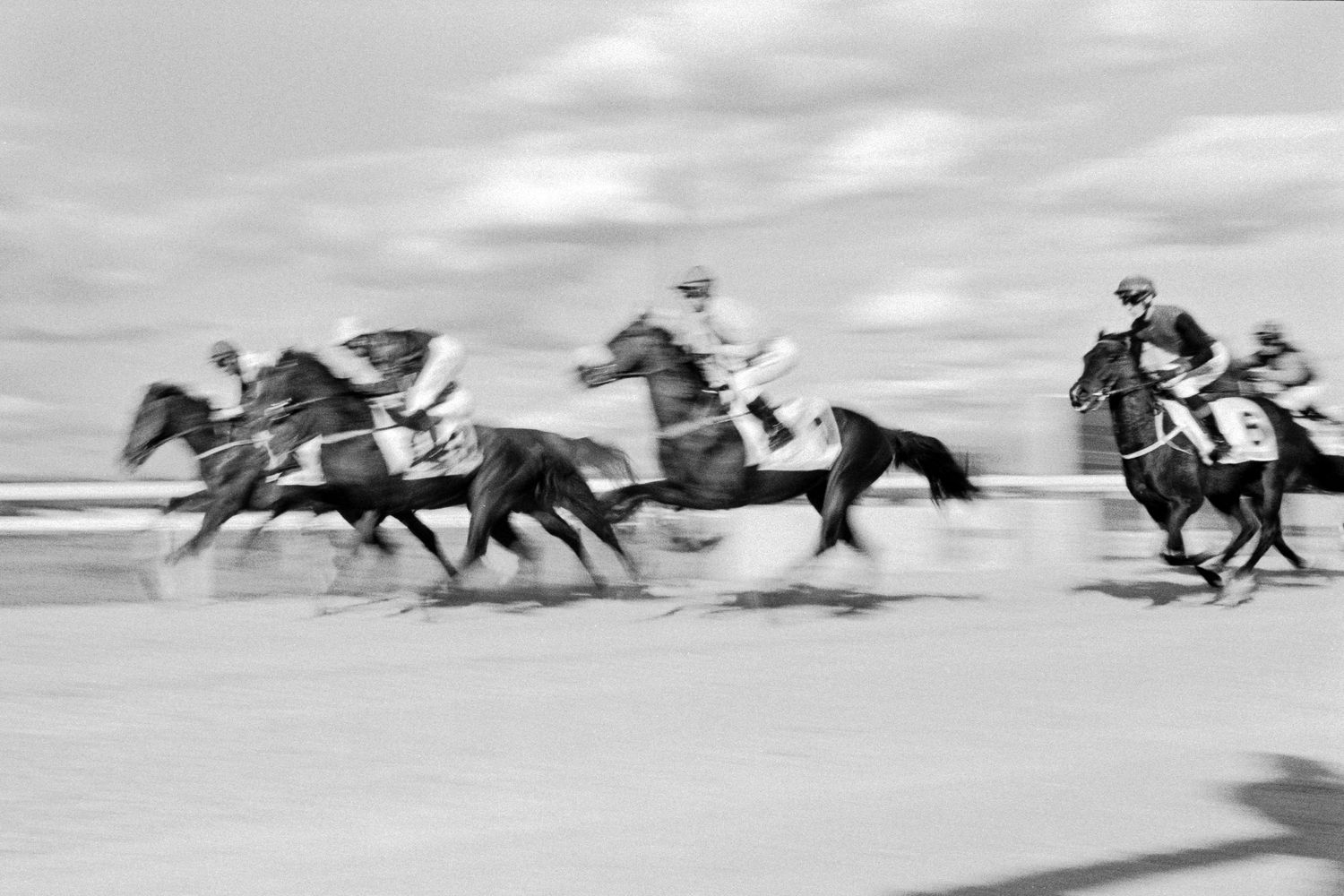
Horses run head-to-head towards the finish line. Gallop is the fastest gait of the horse, averaging about 45-50 km/h. Due to the high energy it requires, horses can maintain this speed for a short period of time, so they usually gallop on short distances only.
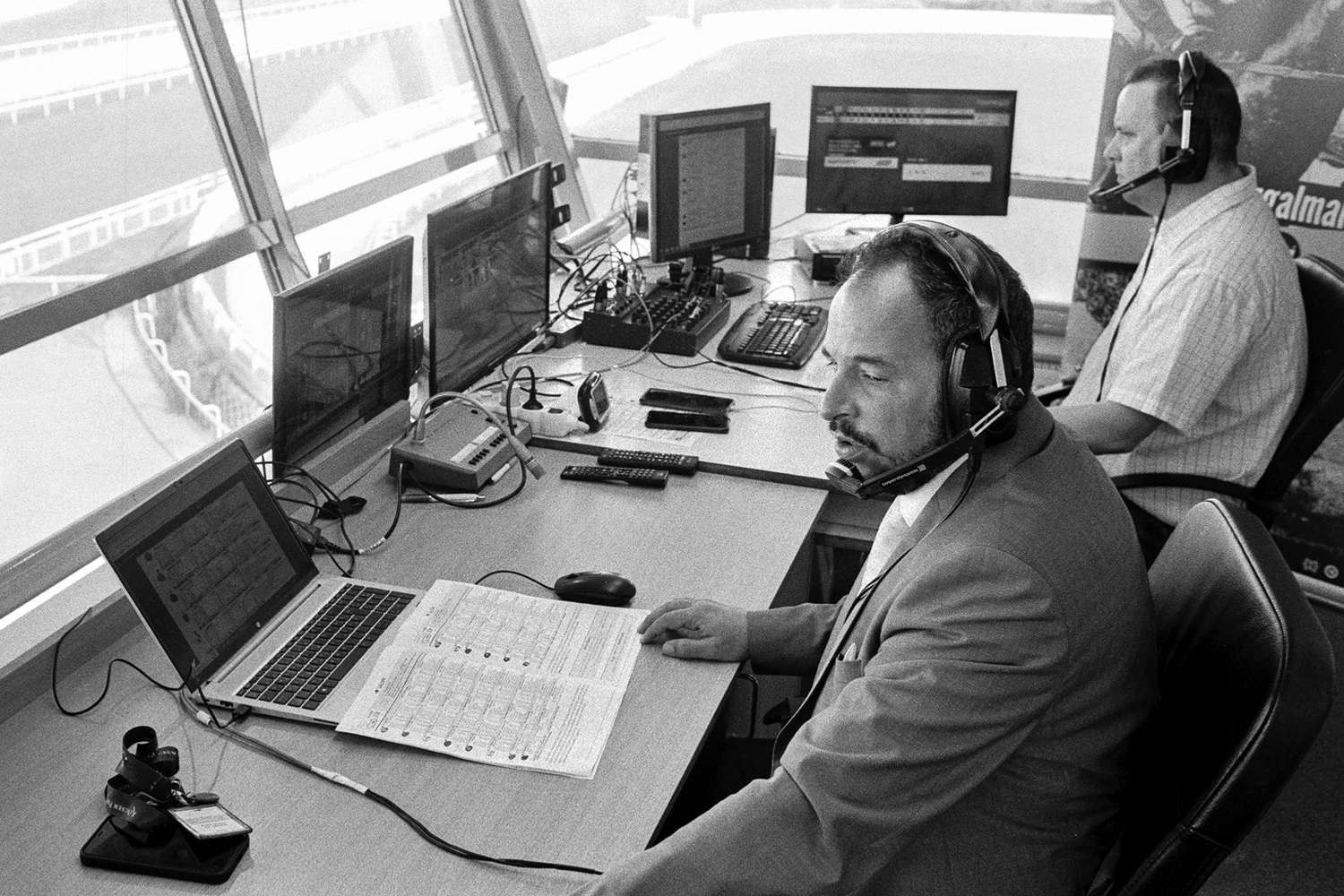
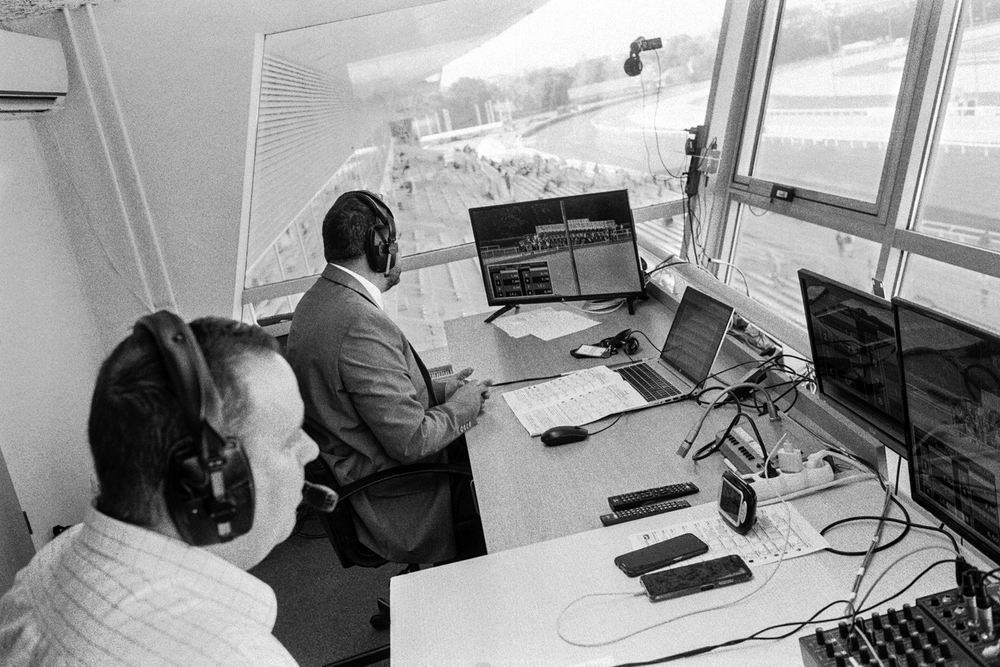
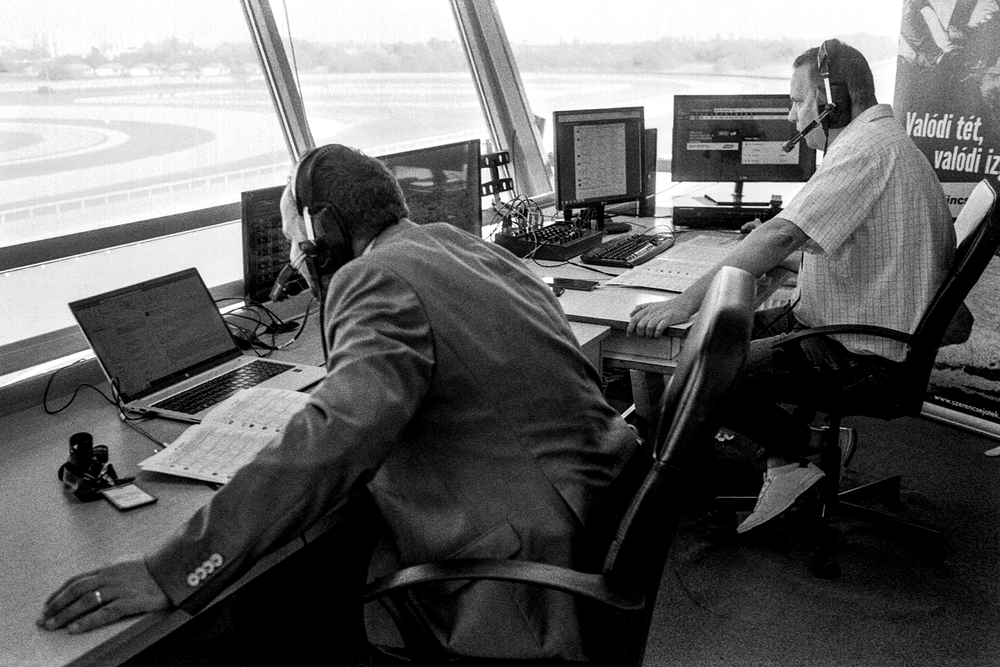
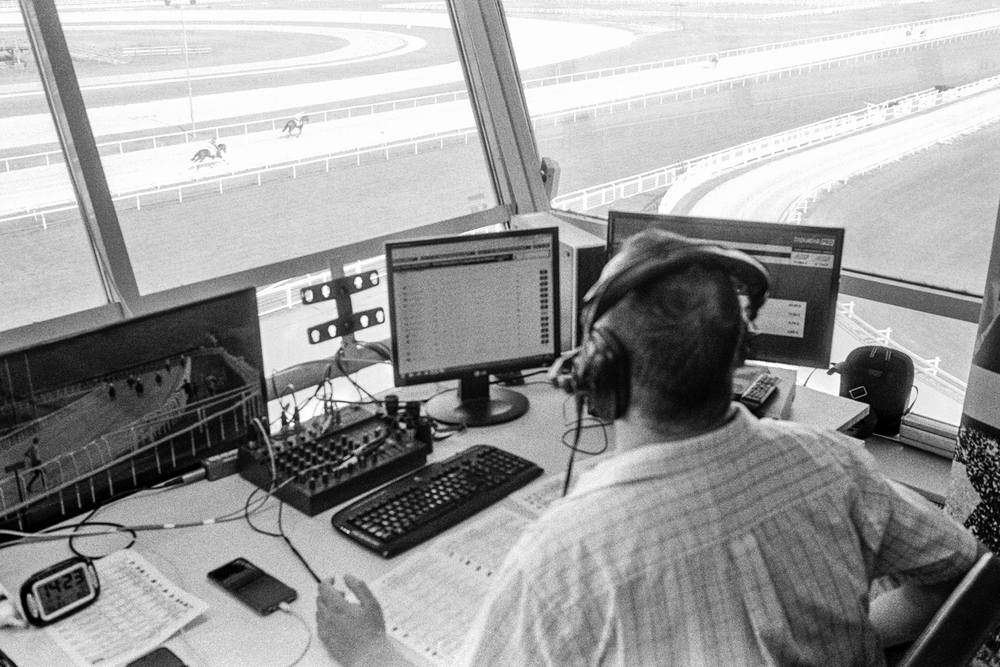
Deputy CEO and Marketing Director, András Krebs (wearing suit), and Racing Director, Zoltán Smulovics (in shirt), broadcast the events on the track during the Alfkona Hendikep race. The broadcasting office is located above the grandstand and provides an excellent view of the track and the races, while moments happening on other parts of the venue can be followed through the screens installed in the office.
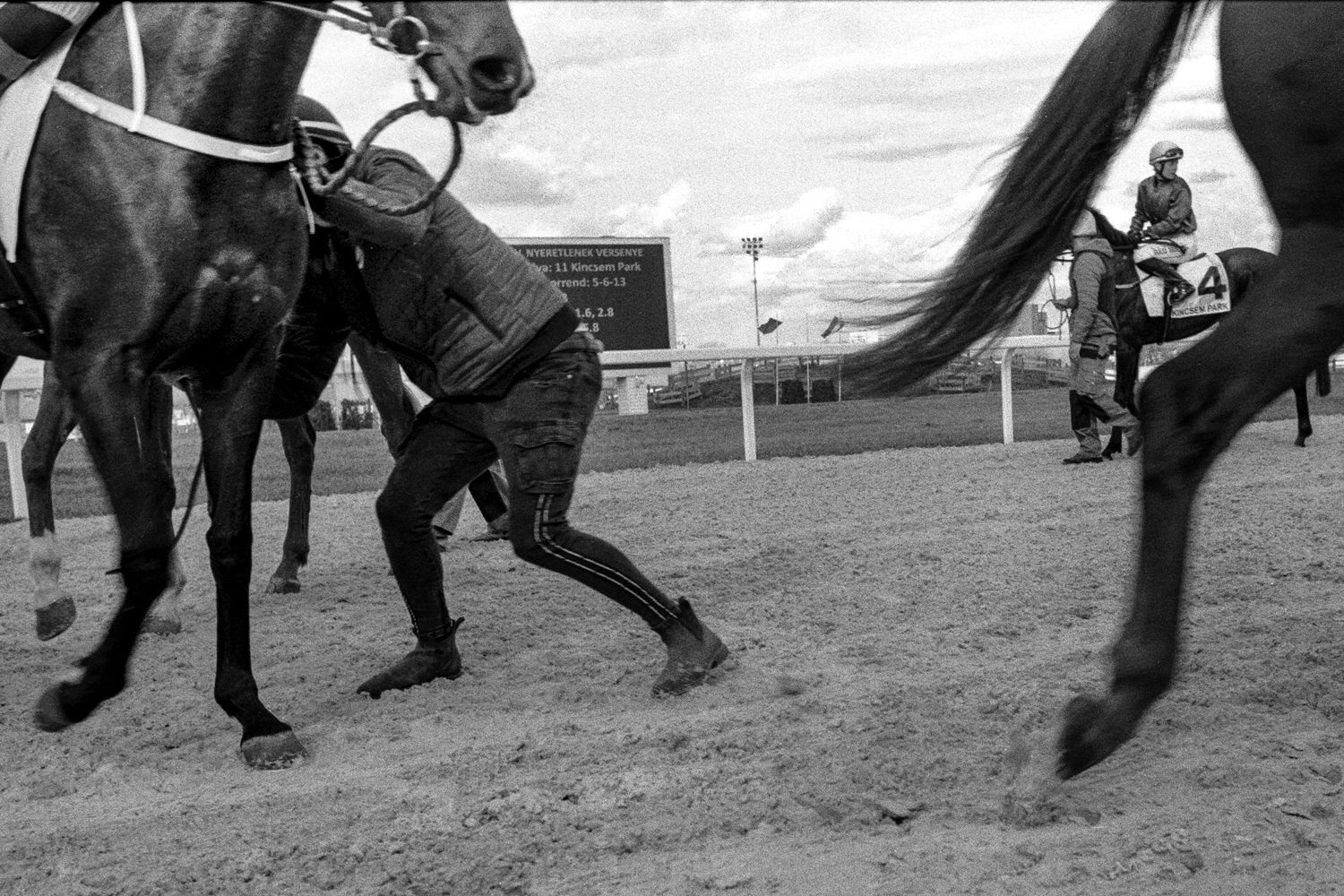
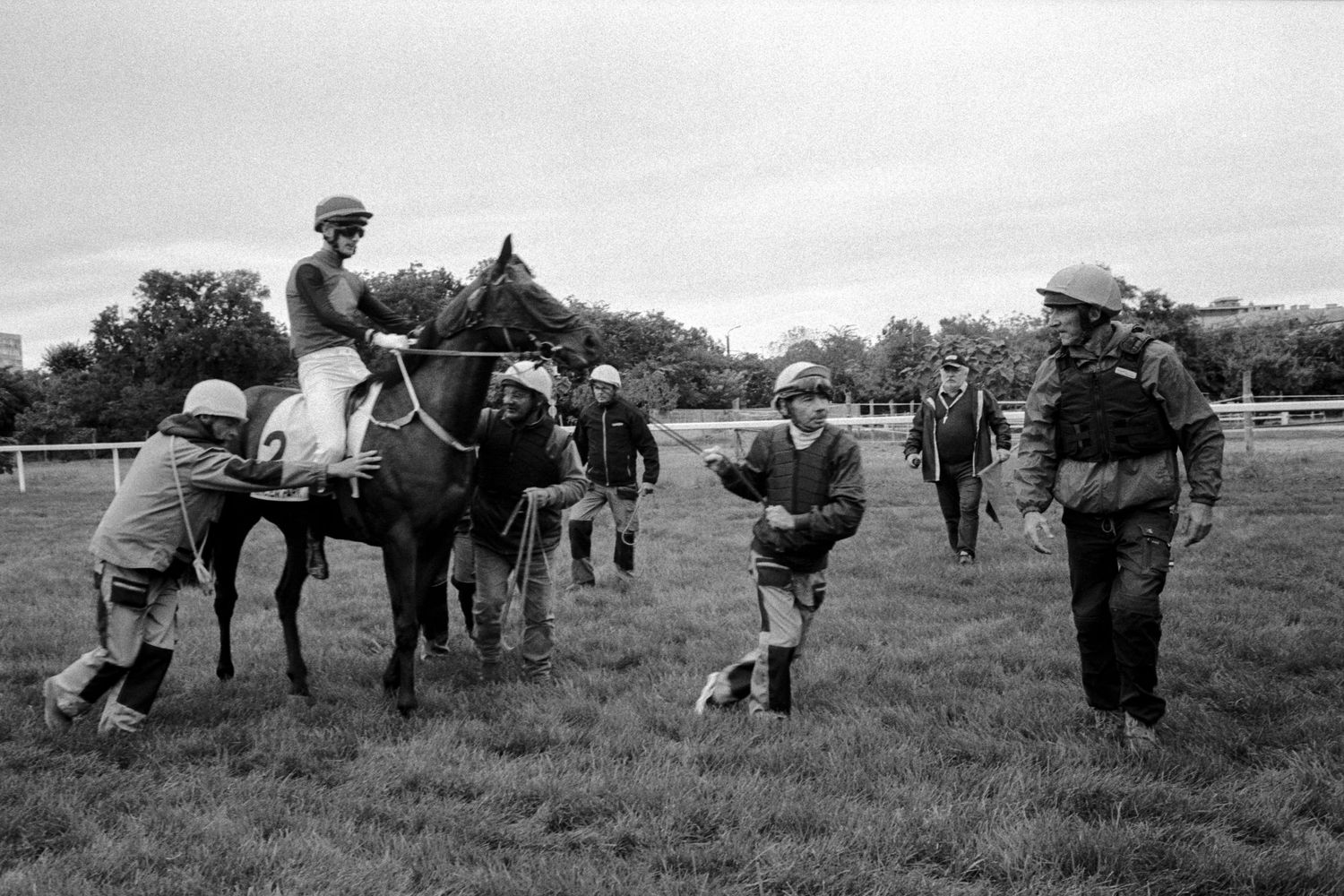
After the race, trainers and handlers go onto the track to welcome the competitors, take hold of the horses' bridles and guide them towards the winner's circle. Their composed yet assured approach prioritizes the horses' welfare and upholds a safe atmosphere for everyone participating.
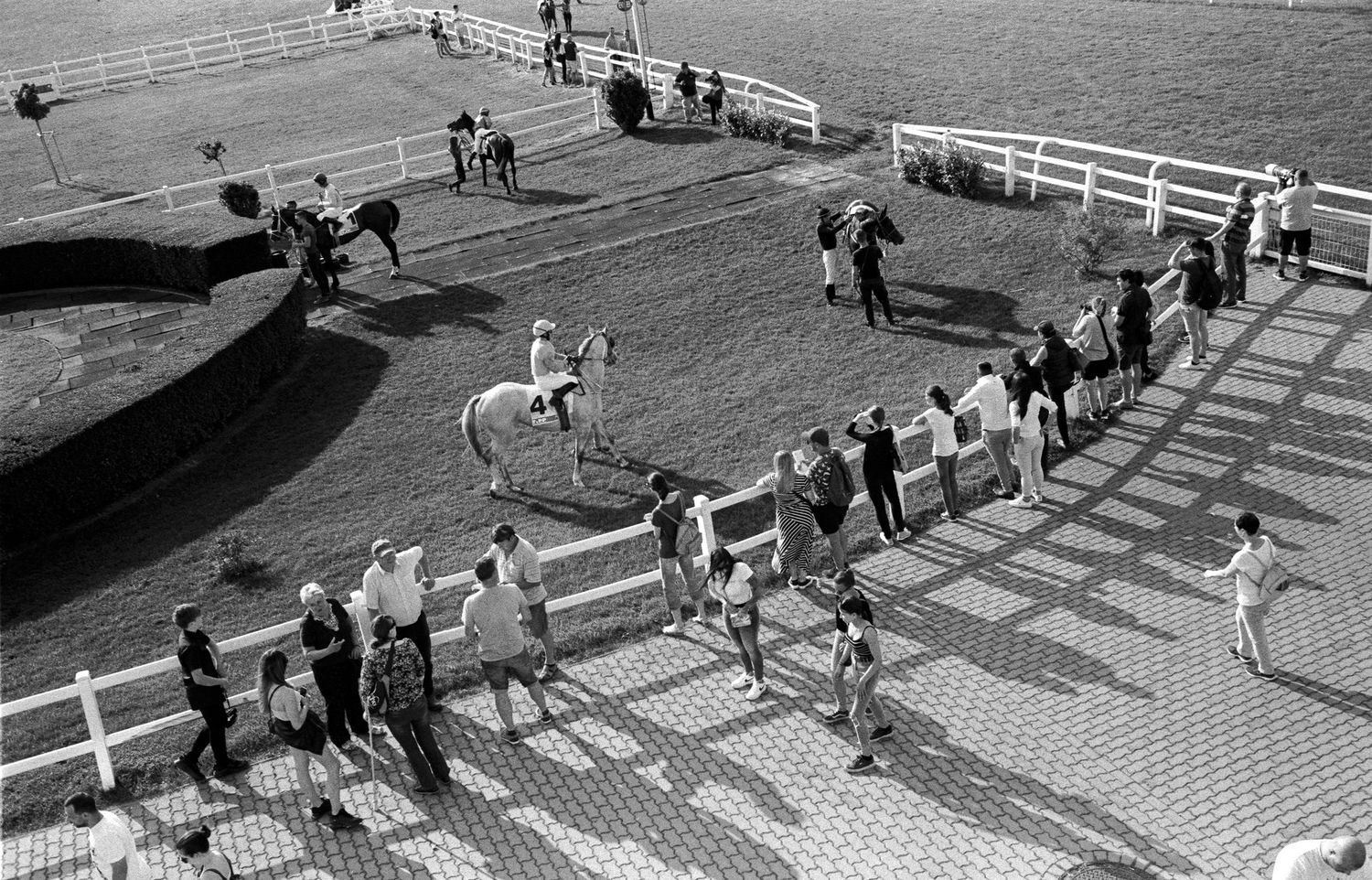
Once the horses are in the winner’s circle, they are kept moving around to help them recover from their exercise on the track.
The winner's circle serves a dual purpose: it's a practical area for horses to be managed and a symbolic space for recognition. It allows for the smooth transition from the race track to the stable area, ensuring that the horses are handled appropriately after the intense physical effort of the race. It also provides a visible platform to celebrate the race's victors and their accomplishments.
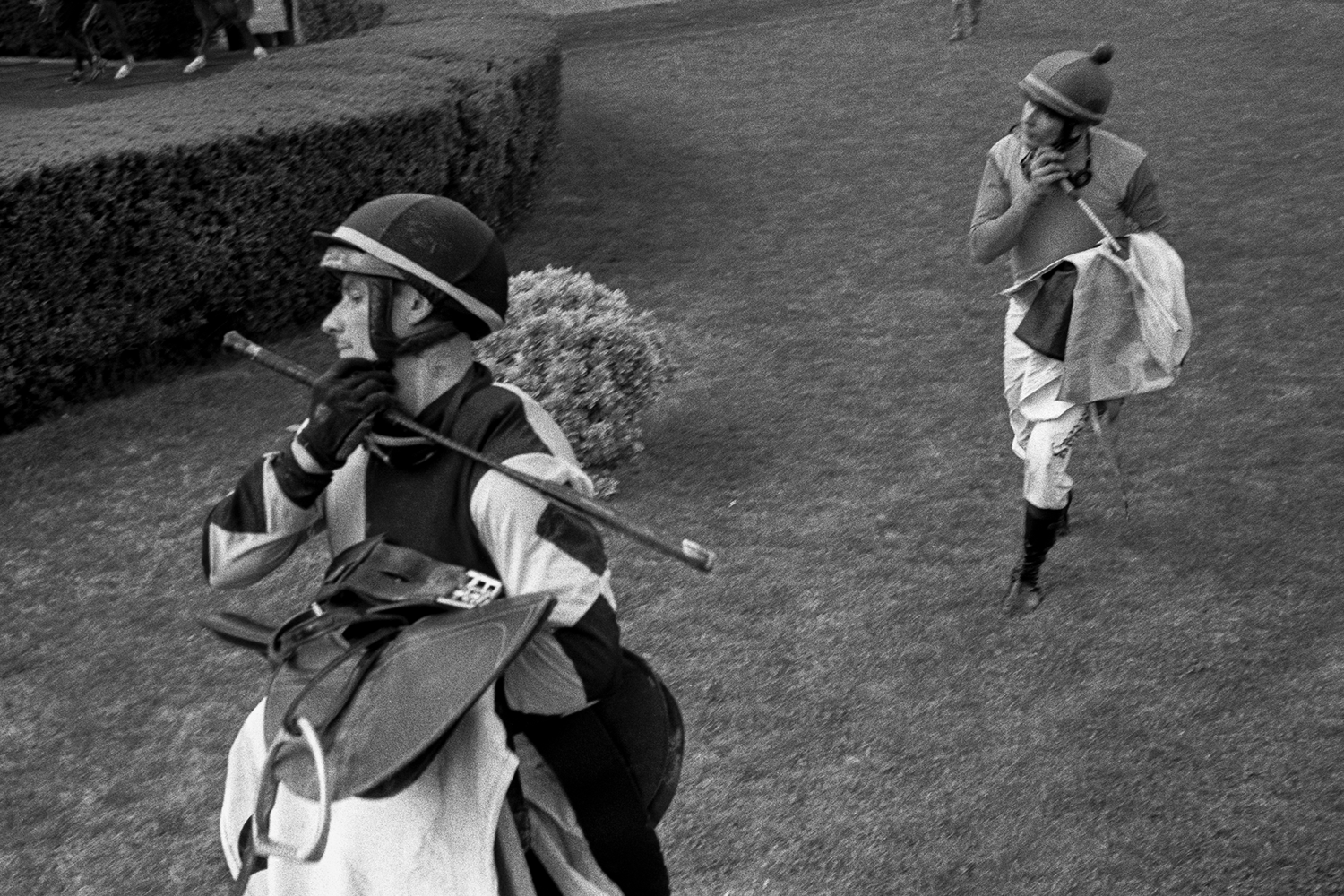
Jockeys Tamás Nagy and Örs Kolumbán (left to right) return with their saddles to the weighing room to make sure that the weight they are carrying is the same as it was before the race.
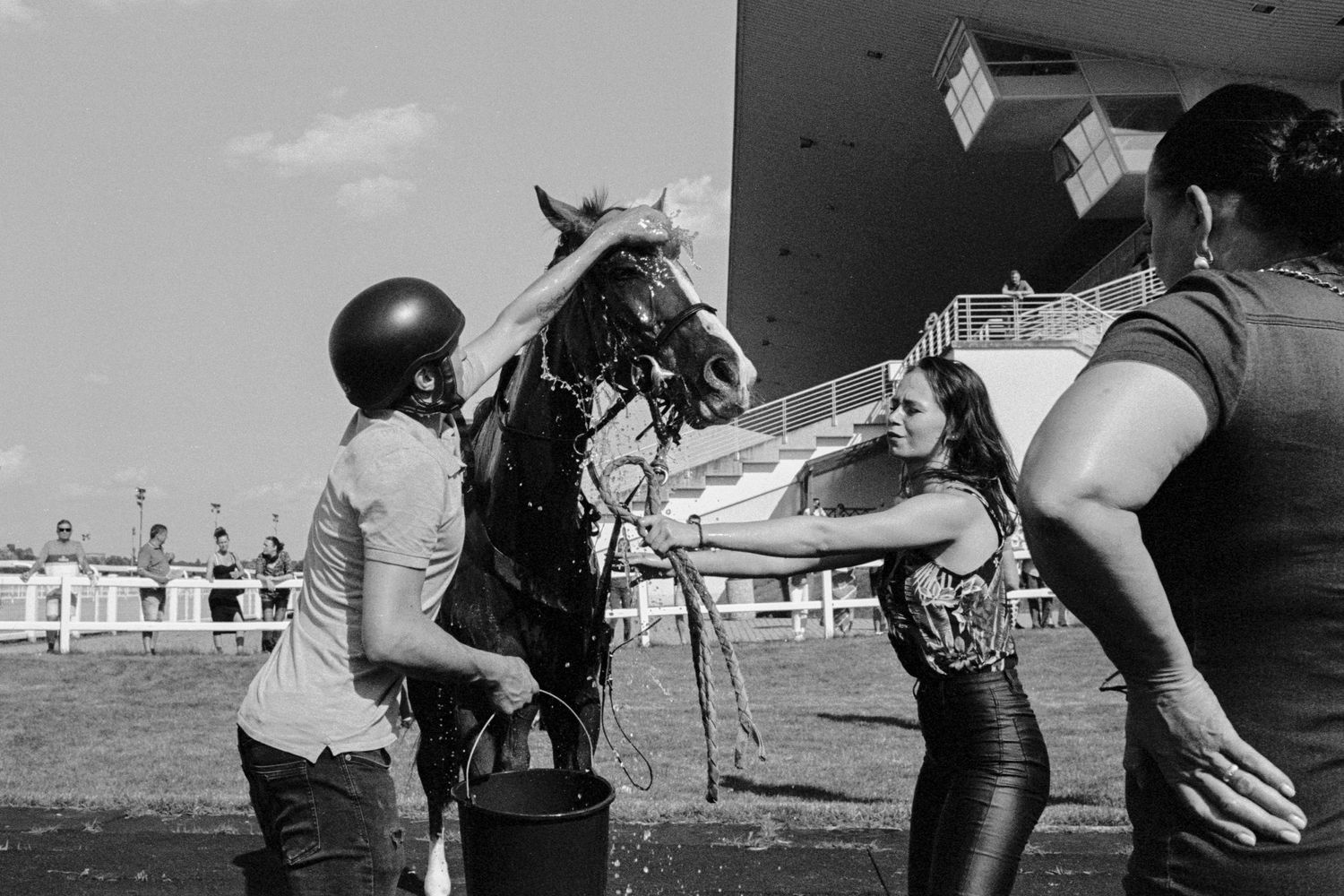
Cleaning the horse of sweat and dirt after the race is a matter of health for the horse, while a neat horse that looks his best is a pride of the horseman.
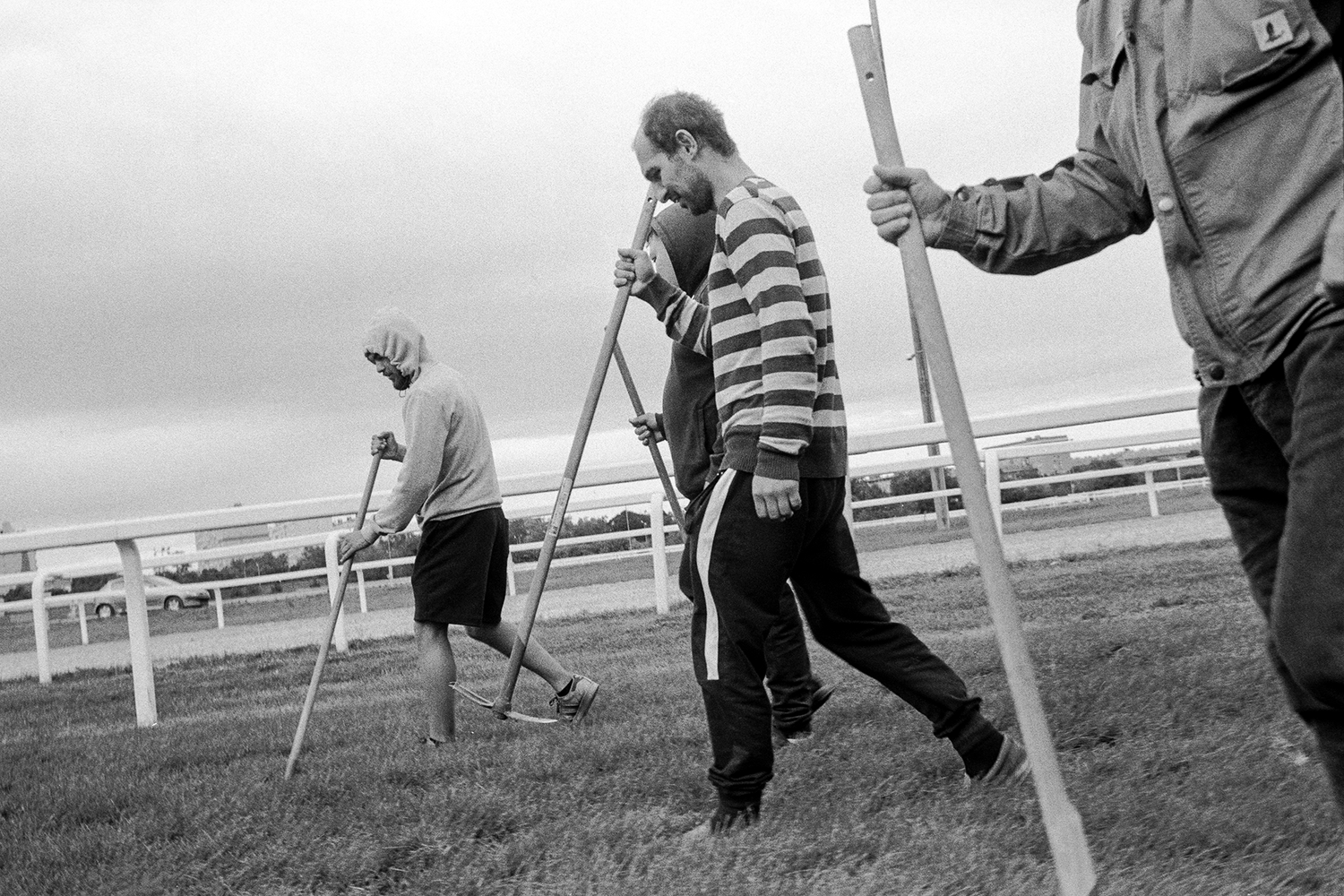
Between the races, groundsmen go over the track with spikers, the tools that are used to aerate the soil and relieve surface compaction, helping to keep the turf in optimal condition for racing. Maintaining a consistently even surface from the starting gate to the finish line is of utmost importance on a racecourse. The action of the horses galloping can exert extreme downward force, posing a primary challenge for racecourse maintenance. Even the slightest unevenness or small imperfections in the turf can pose a risk to the horses' well-being.
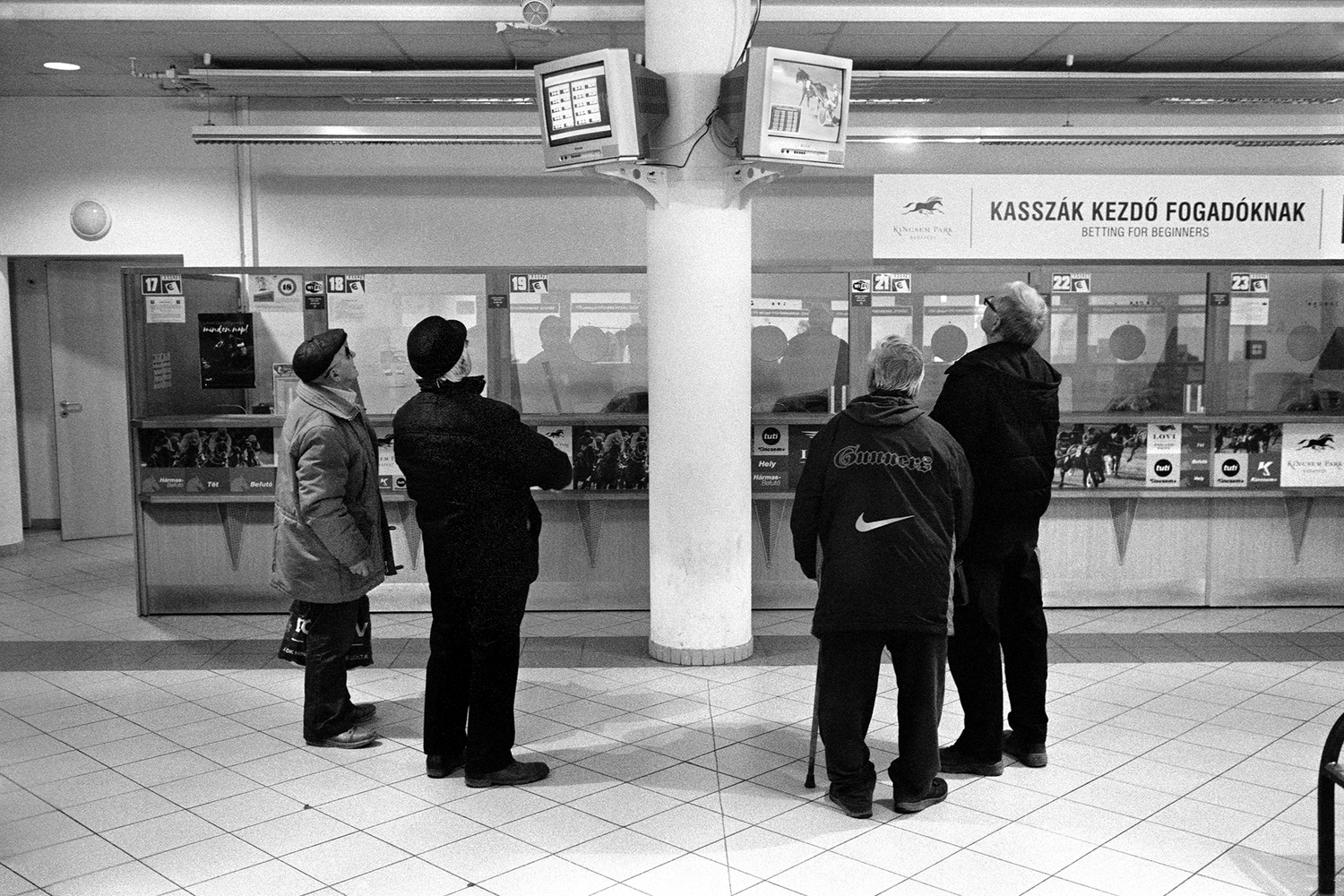
Racegoers watch the CAEN Harness Racing inside the lobby of the central building. International races often run parallel to the national contests.
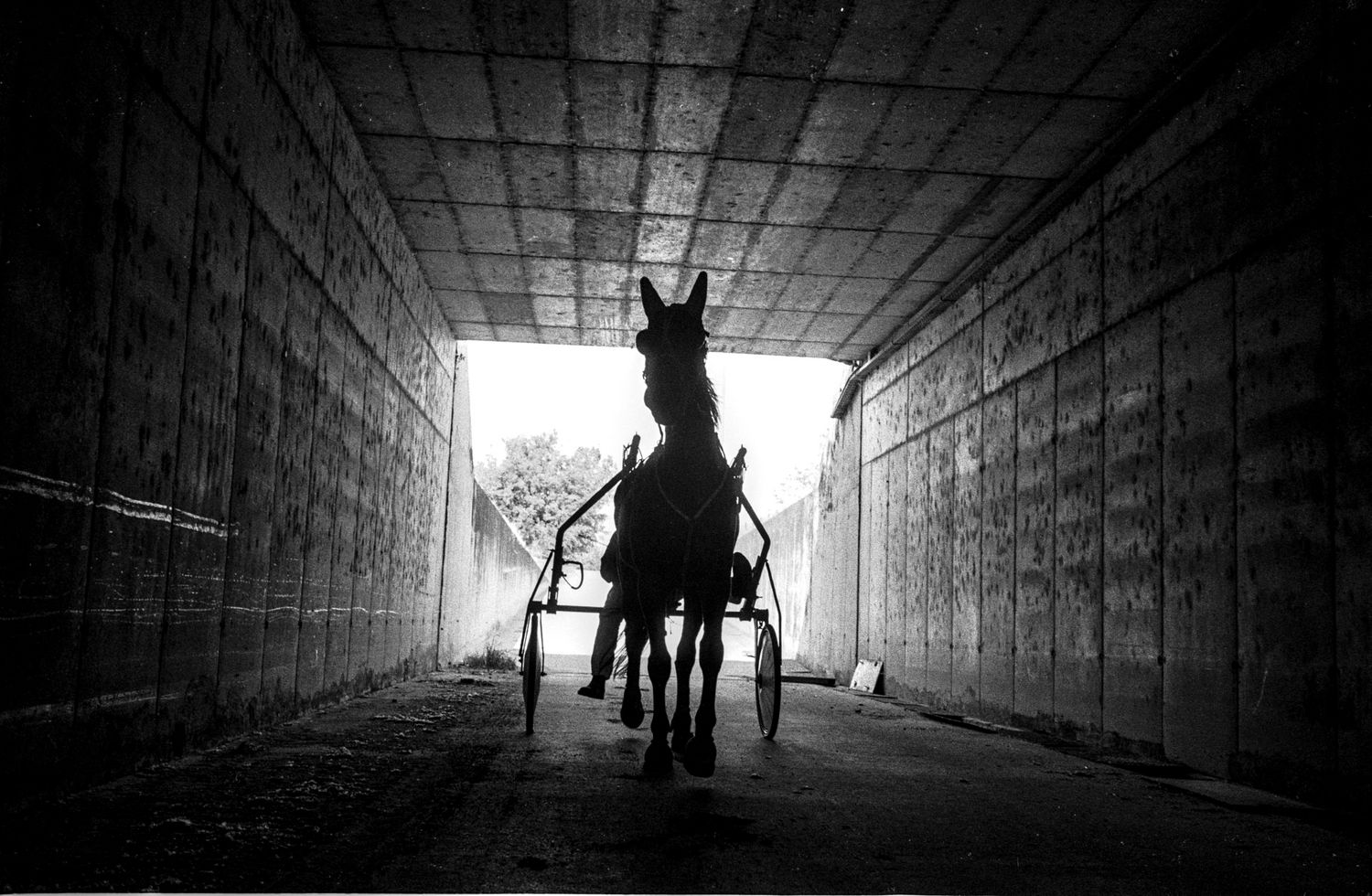
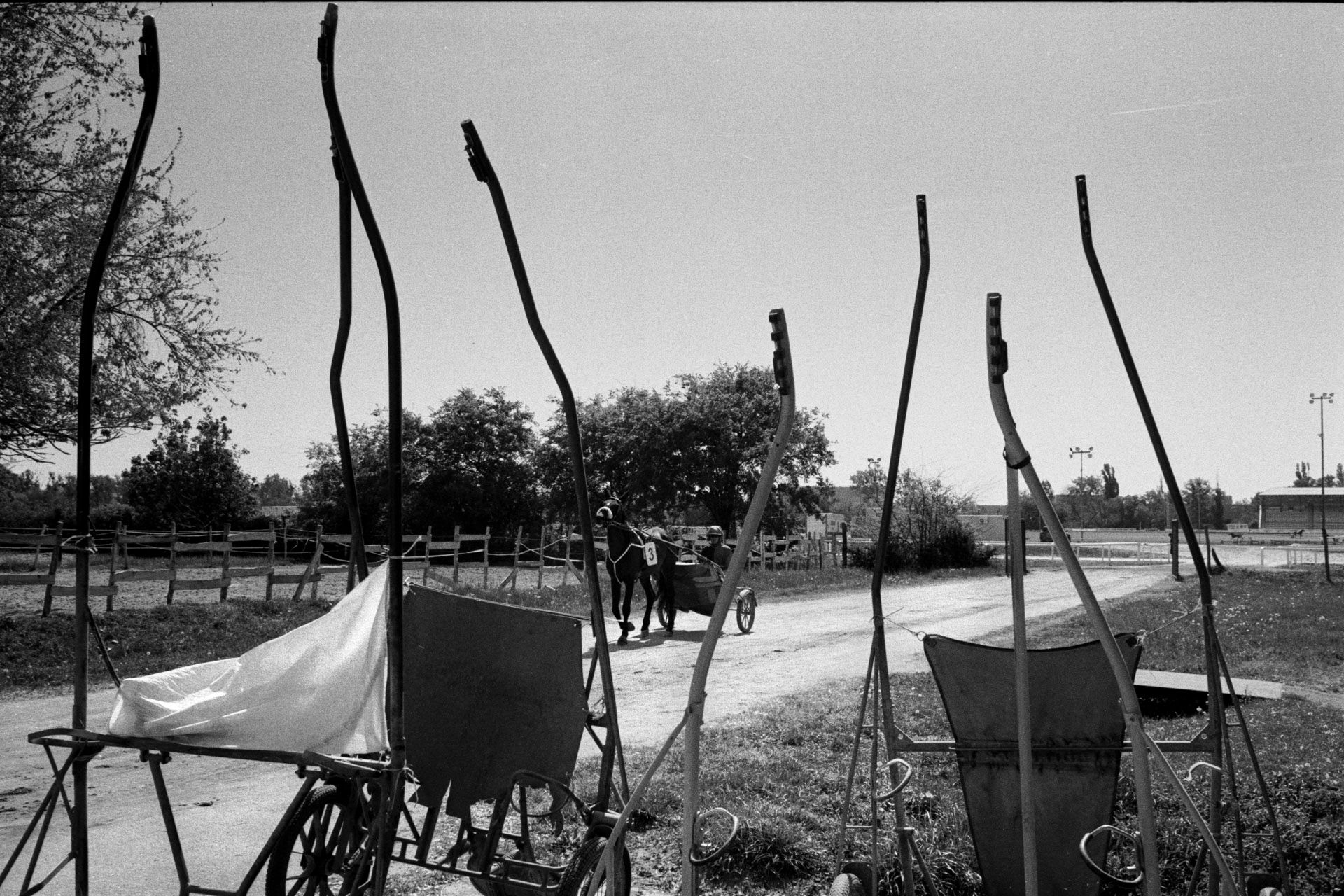
Unlike most forms of horse racing where jockeys ride on the horse's back, in harness racing the horses trot while pulling a driver in a cart behind. The cart, called a sulky (also known as a spider) is a light, two-wheeled cart equipped with bicycle wheels.
One of the distinguishing features of harness racing is the use of standardbred horses, a breed known for its ability to trot or pace at a consistent gait. These horses are specifically trained for racing, with a focus on endurance, speed, and the ability to maintain a steady pace over long distances.
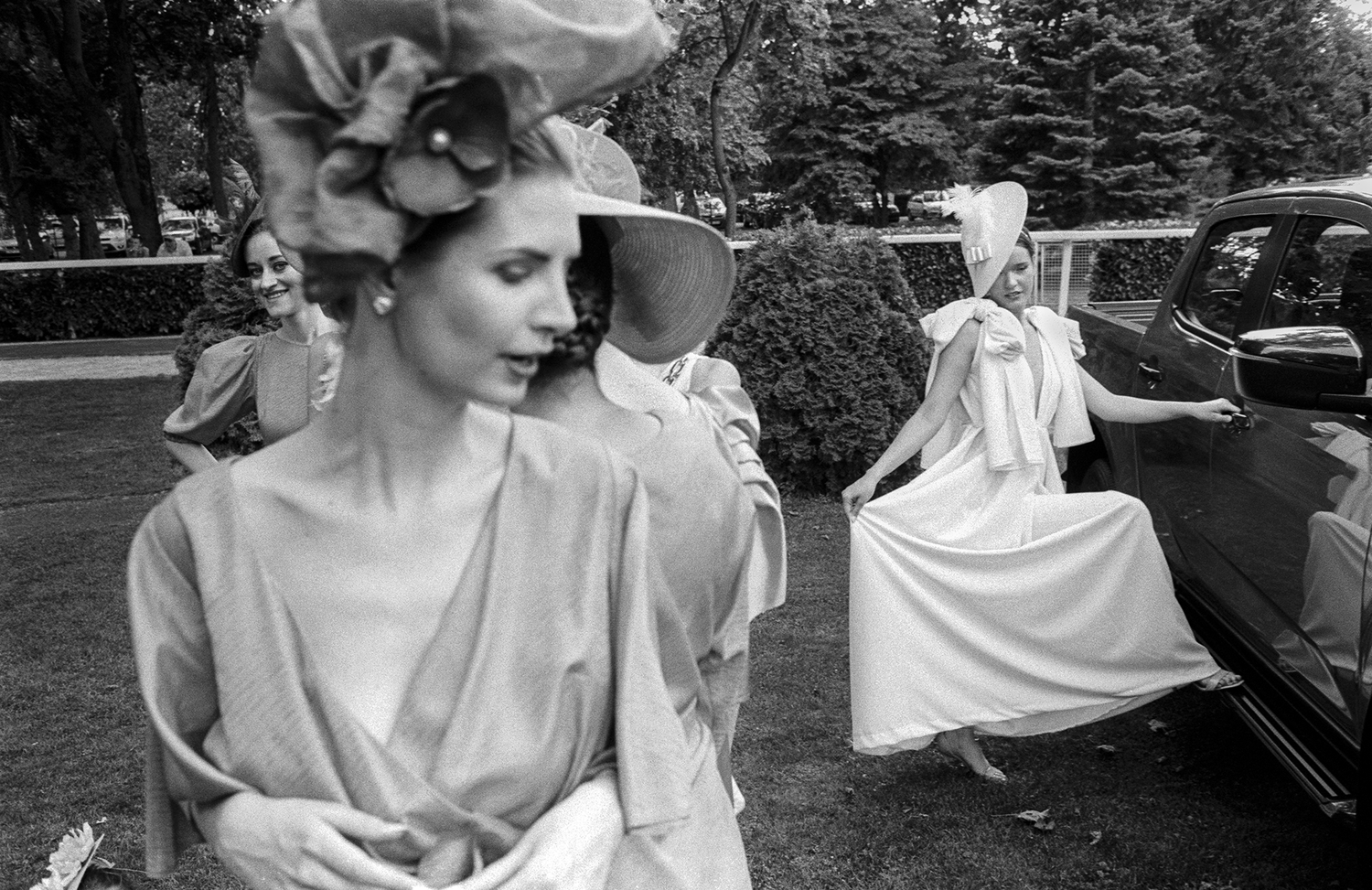
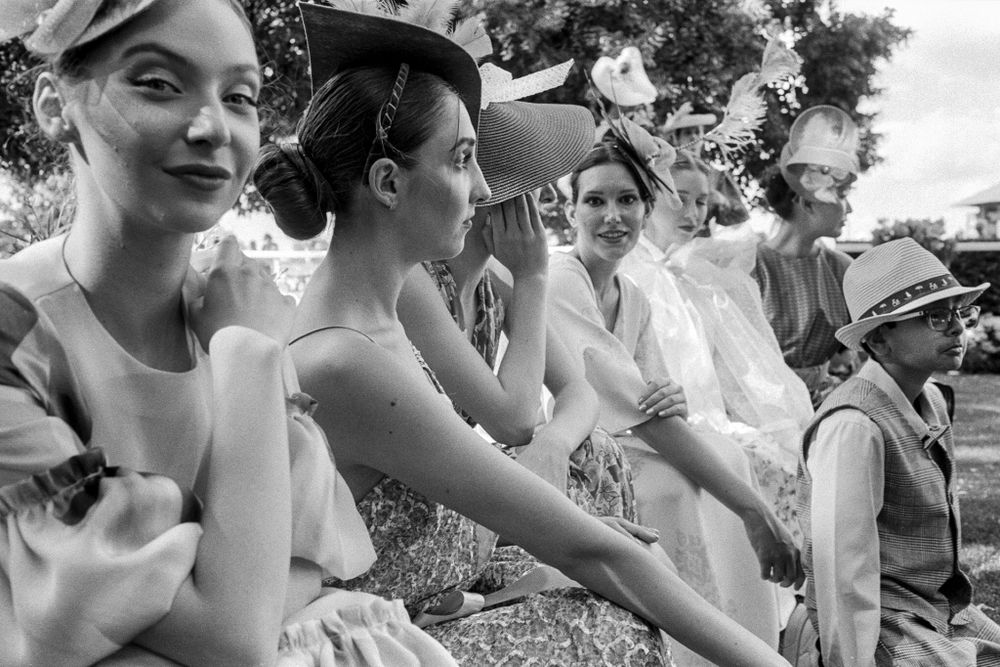
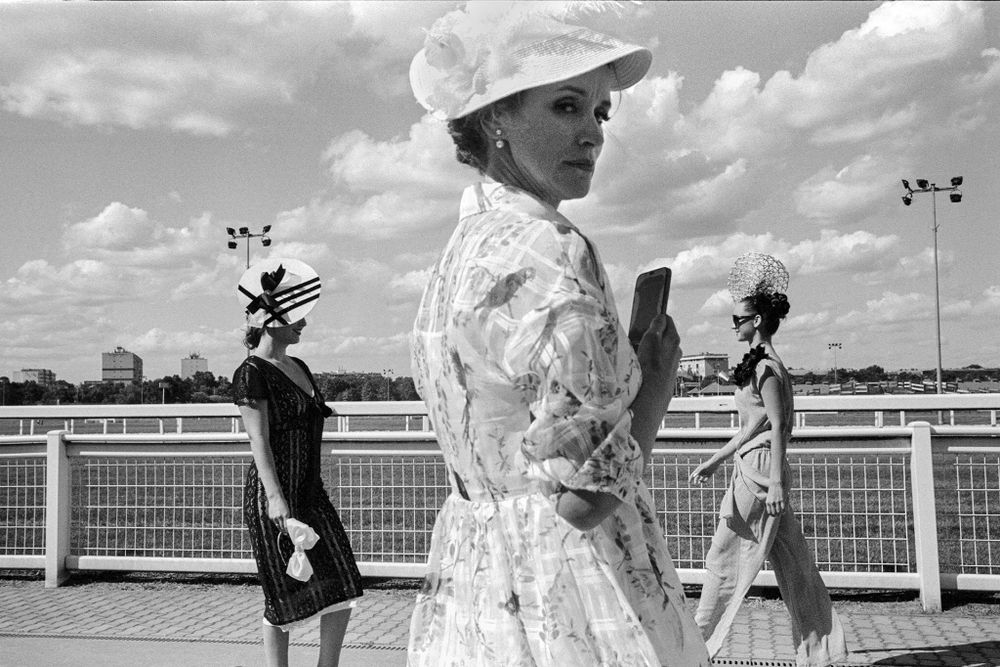
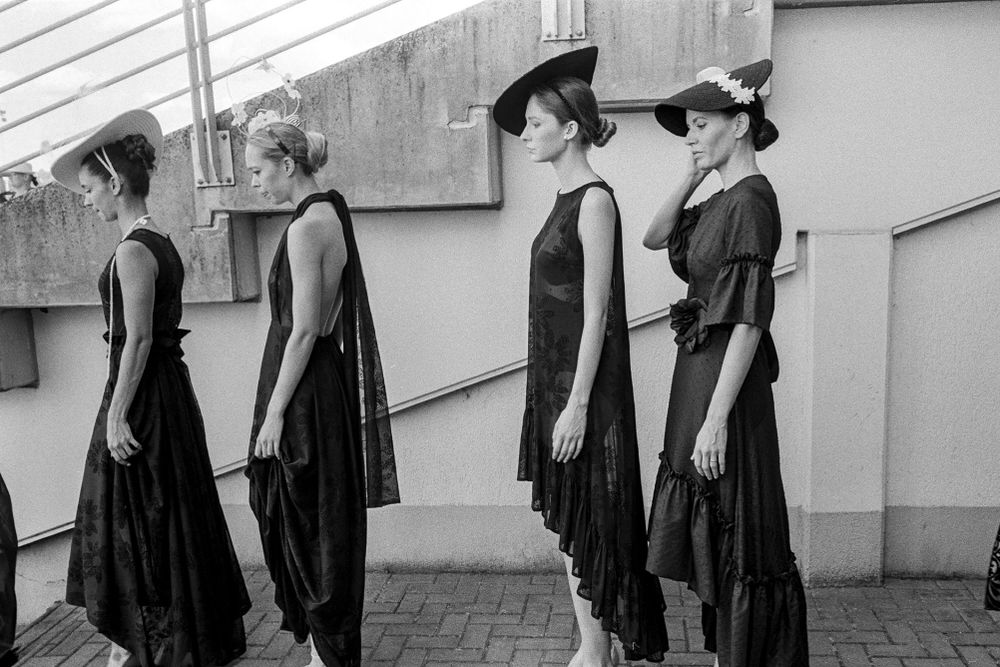
Each year, the venue gives home to numerous prestigious events, with the Hungarian Derby shining as the pinnacle of summer. By bringing horse racing together with the glamour of a high-end fashion showcase, the three-day affair enjoys immense popularity. Models strut down the runway, wearing exquisite, genuine period garments, captivating the audience with their grace and style. The distinctive atmosphere is assured by the racegoers who embrace the opportunity to don their finest outfits, alongside the national celebrities, drawn by the event's esteemed status and appeal.