Lush fever
(Part 2)
Cross the border into Bolivia and the mood shifts abruptly. Peru’s south-eastern neighbor has long struggled with deep structural economic challenges that have fueled public frustration and eroded trust in state institutions. Landlocked since the 19th century and still marked by the consequences of the War of the Pacific, Bolivia’s geography is as politically symbolic as it is physically dramatic. A country of high Andean plateaus, sprawling informal cities, and lowland plains divided by stark inequalities.
Despite vast natural wealth, from silver in Potosí to the lithium reserves beneath the salt flats of Salar de Uyuni, prosperity has rarely been evenly shared. Cycles of resource extraction have often deepened dependence rather than delivered stability, while rural and Indigenous communities have historically remained marginalized from political power.
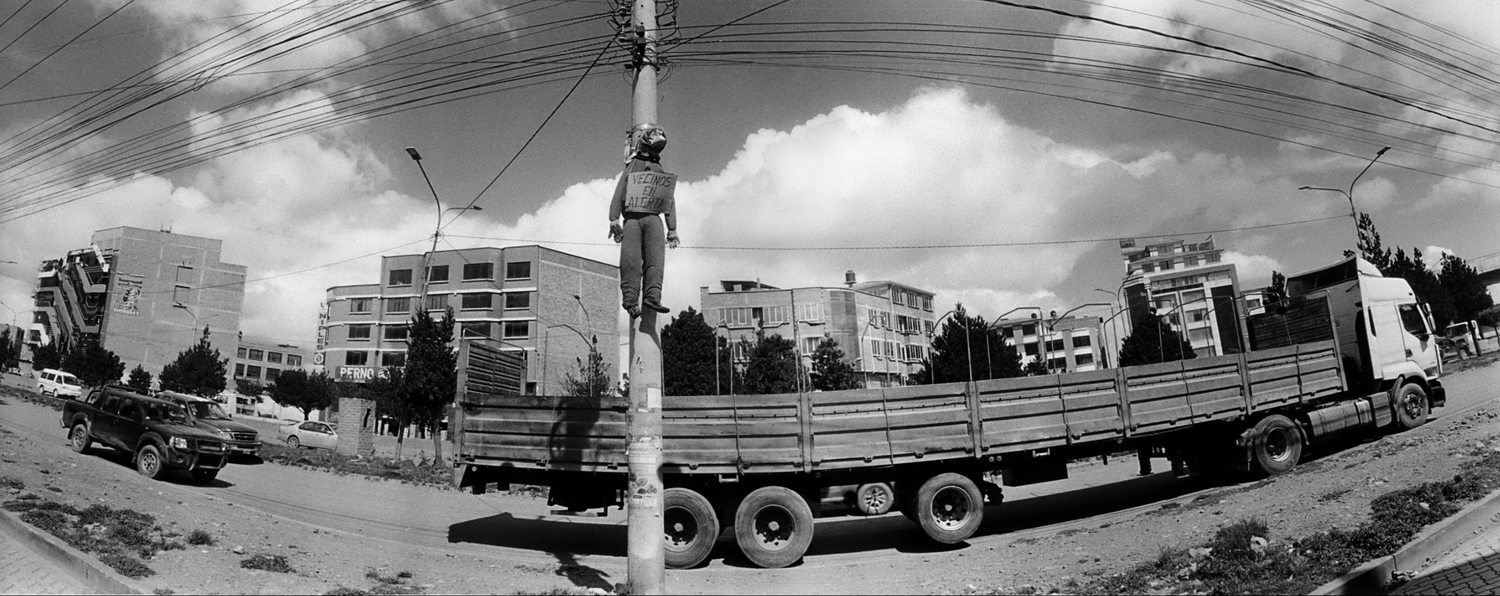
“Neighbors on alert,” reads the sign attached to an effigy hanged from a power line, warning criminals that they may face mob justice or lynching if caught stealing. El Alto, Bolivia
In communities where residents feel the authorities cannot adequately protect them from theft or violent crime, informal and sometimes extralegal forms of “community justice” have taken root. Since the ratification of the 2009 constitution guaranteeing this right, there has been an increase in cases where false accusations have led to tragic consequences.
Across much of the country, whether local Indigenous authorities or the state are formally responsible for preventing crime, the presence of law enforcement remains limited. El Alto, a city notorious for criminal activity, has a population of around 850,000, yet only about 2,500 police officers and 40 patrol cars are available to maintain order.
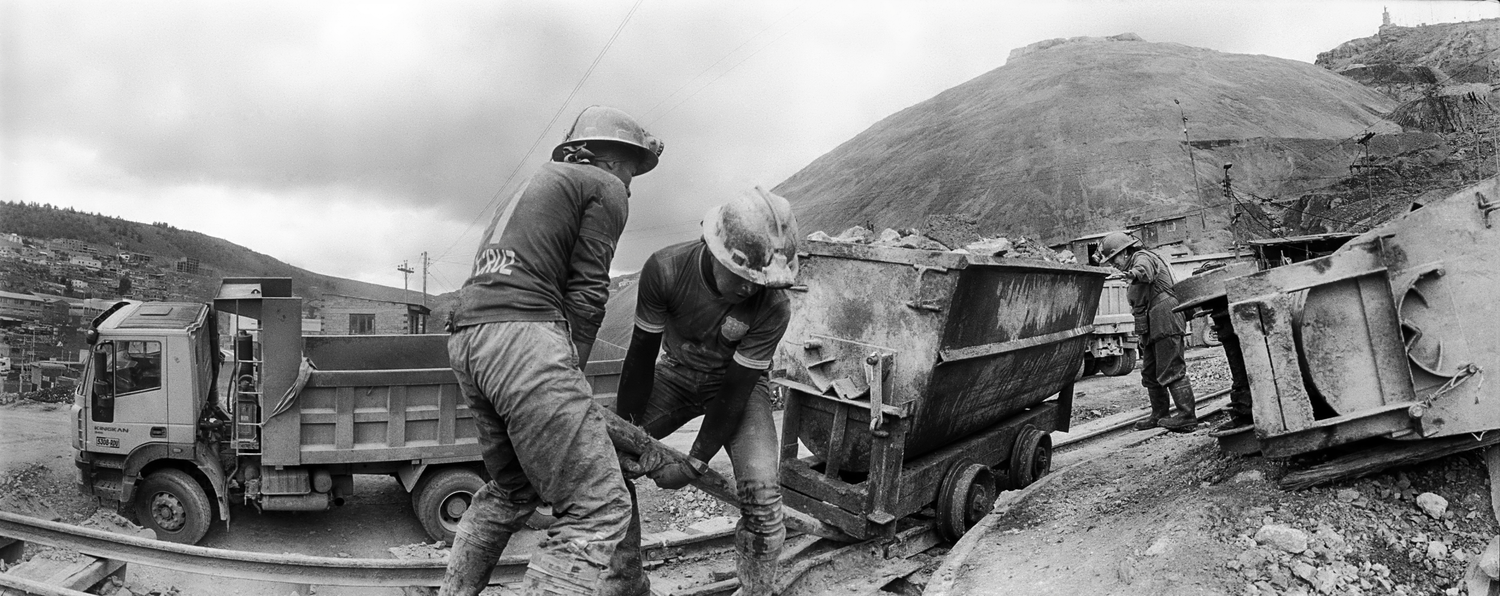
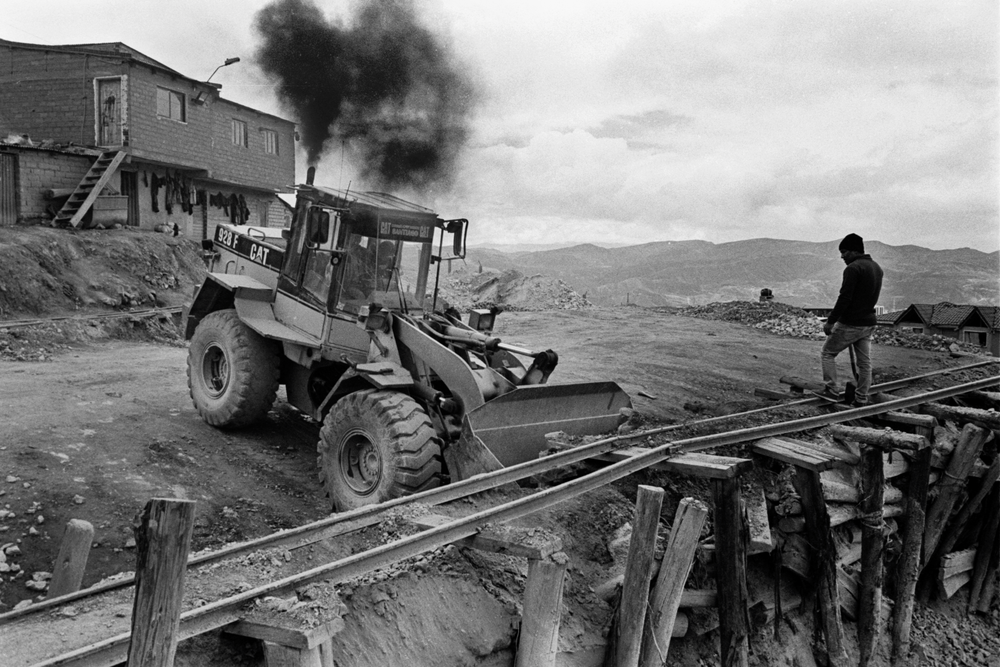
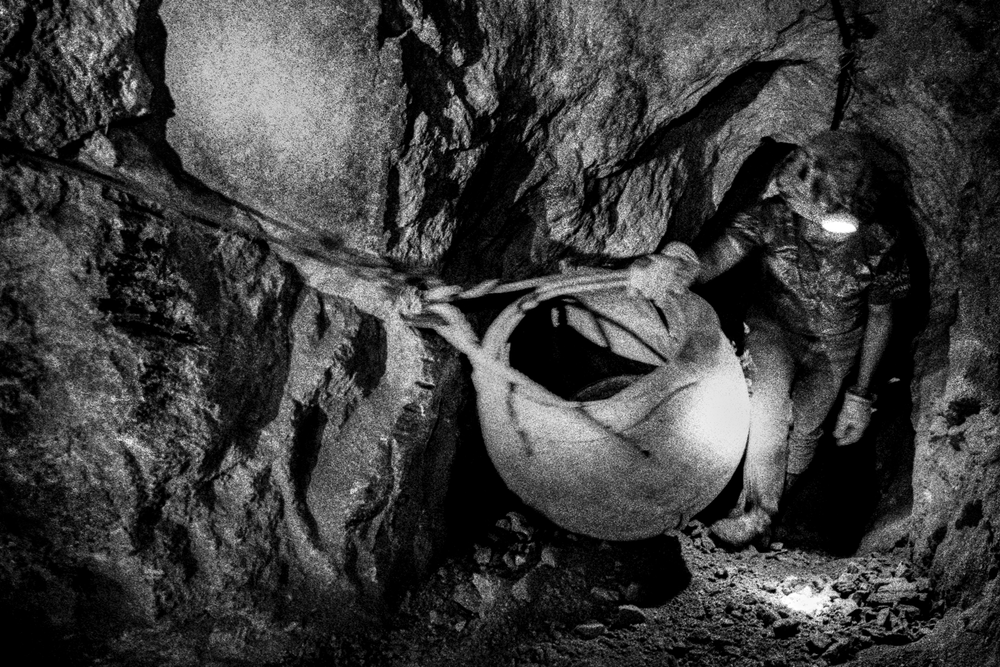
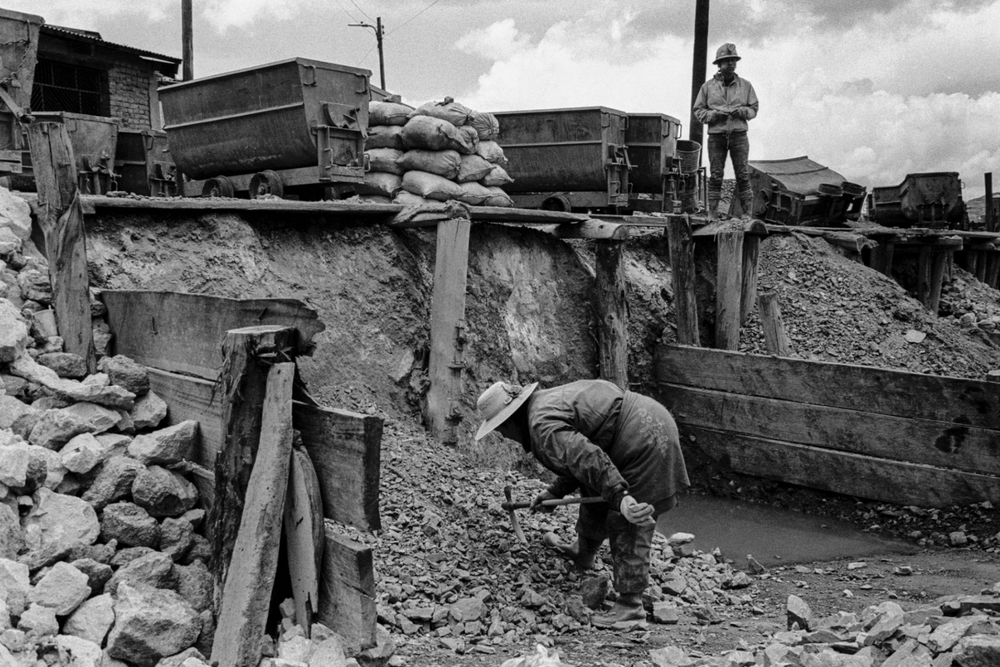
Despite 500 years of operation, making Cerro Rico one of the world's most exploited deposits, mining continues today in the structurally unstable and slowly sinking mountain. The work remains overwhelmingly dependent on manual labor: men haul carts, drill by hand, and work with rudimentary tools in conditions where modern industrial technology has barely taken hold. Cerro Rico, Potosí, Bolivia
Further east, high in the mountains, lies Potosí, one of the highest cities in the world. Its 120.000 inhabitants earn their livelihoods from the mines of Cerro Rico (“Rich Mountain”), the largest silver deposit ever discovered. Since its discovery in 1545, the mountain's name has been synonymous with vast mineral wealth.
Under Spanish colonial rule, Potosí became one of the largest and wealthiest cities in the world. The Spanish crown relied heavily on forced Indigenous labor, compelling thousands to work in the mines under brutal conditions. It is estimated that hundreds of thousands of Indigenous and enslaved African laborers died over the centuries due to accidents, overwork, and disease.
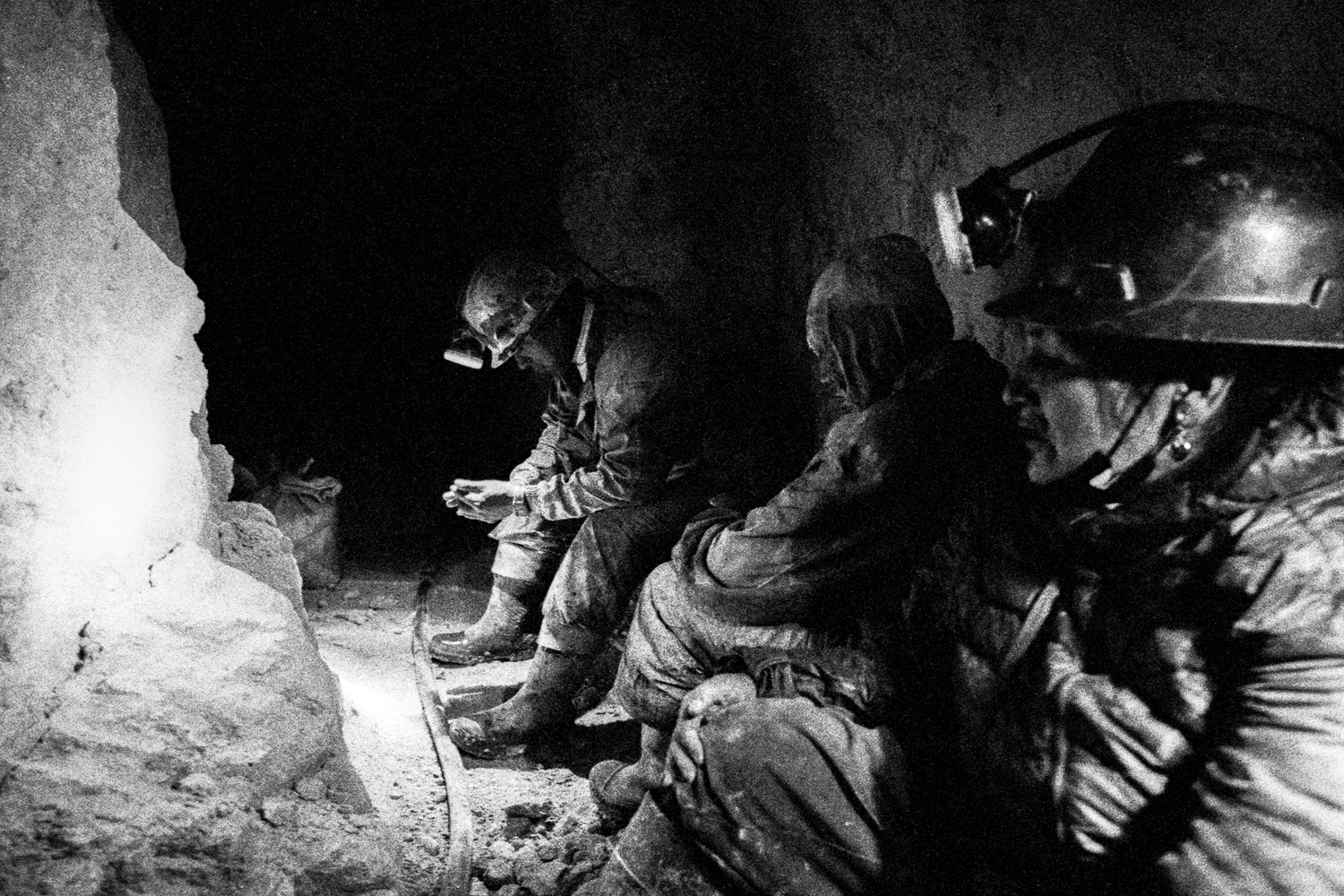
Drillers wait for nearby blasts to detonate before they can resume drilling their own holes for dynamite. Safety standards are limited, and miners are responsible for securing and maintaining their own equipment, which is often basic and worn out. Cerro Rico, Potosí, Bolivia
Today, not only silver, but also tin, zinc and lead are extracted in the mine, where working conditions remain harsh. The miners descend into narrow shafts supported by aging timber. They are facing with a constant risk of cave-ins caused by dynamite explosions. Even the explosives themselves are unreliable. The dynamite sticks and the detonating fuses are fabricated by hand in Potosí. The quality is poor and unpredictable.
At this high altitude, the air is thin and breathing is difficult, even more so in the poorly ventilated tunnels. They are filled with silica dust that slowly accumulates in the miners' lungs, causing silicosis, an irreversible chronic lung disease.
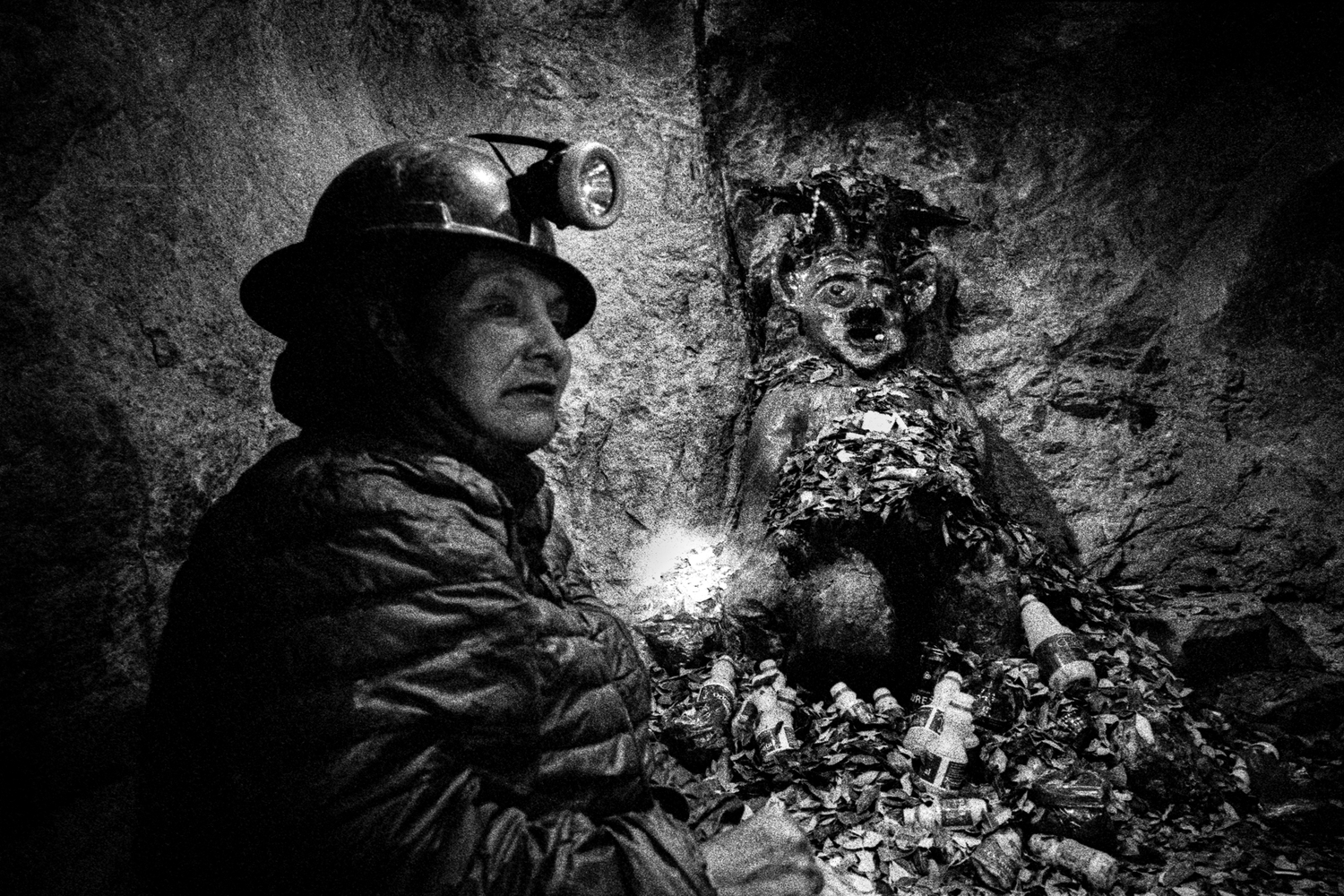
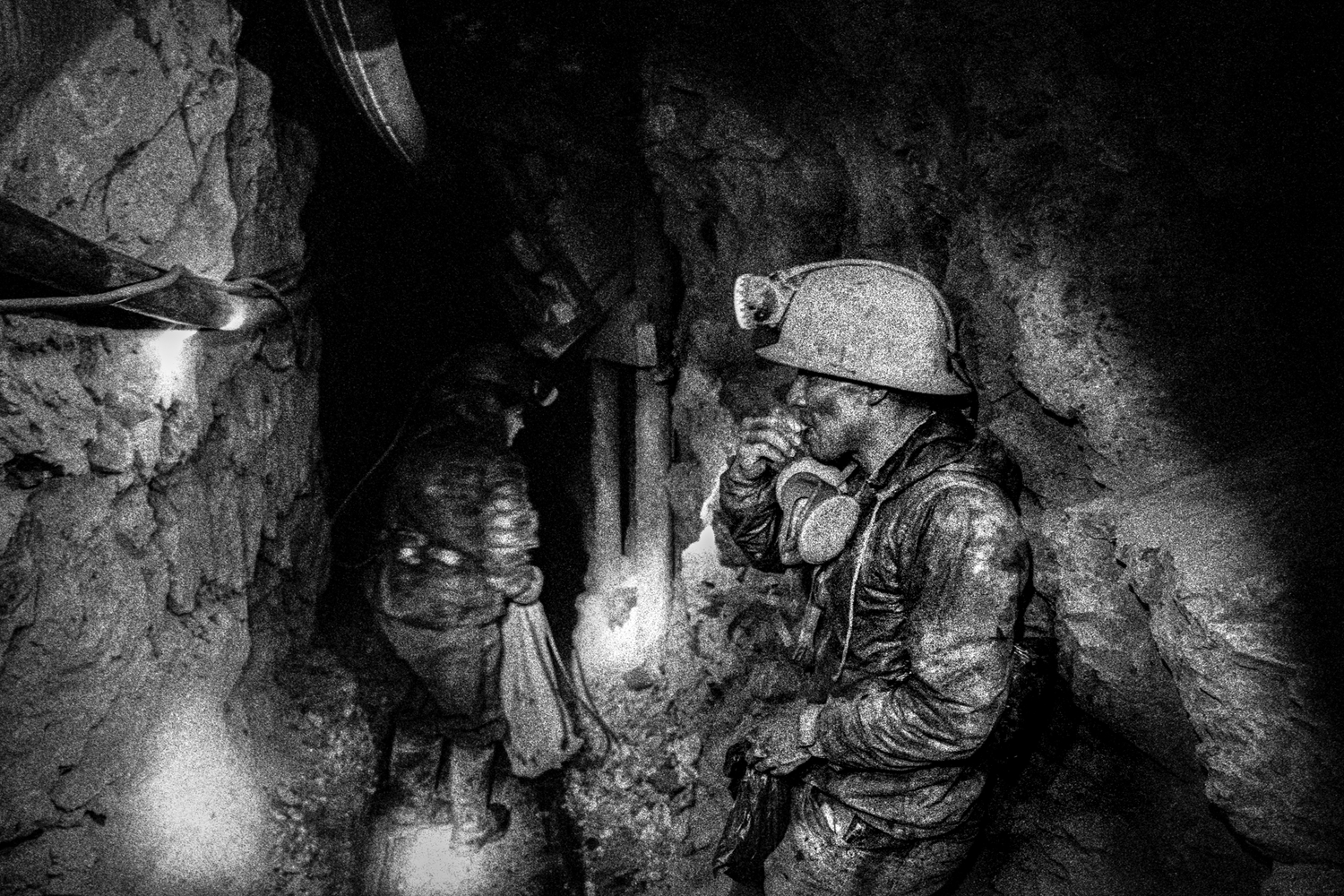
In the underground world, Tio reigns - the capricious devil who decides who lives or dies, who prospers and who fails. For protection, miners offer him cigarettes, coca leaves, and booze. (right) Coca is the sacred plant of the highland Indigenous peoples. It's a powerful stimulant, that helps miners cope with pain, fatigue, and the thin mountain air. (right) Cerro Rico, Potosí, Bolivia
Miners are the best-paid unskilled laborers in Bolivia. They can earn up to four times the national average wage, approximately 1,500–2,000 bolivianos per week (about 215–290 USD). However, these earnings reflect extremely long shifts, often up to 16 hours a day, as the miners decide themselves how much and how long to work. While the pay can be attractive compared with limited local alternatives, the physical strain and prolonged exposure to hazardous conditions contribute to long-term health problems and a shortened life expectancy. Nearly five hundred years after the first silver was extracted, Cerro Rico still shapes the fate of Potosí.

Ekeko, the Aymara god of abundance and prosperity, is brought to life at the annual Alasitas fair. Traditionally depicted as a mustachioed man in Andean clothing, he carries miniature items, symbolizing the blessings and prosperity people hope to attract. La Paz, Bolivia
While miners labor long hours in the depths of Cerro Rico to earn their wages and build a better life, Bolivians in the capital reach for symbols of prosperity at the Alasitas fair.
Rooted in Aymara traditions and formally recognized in the 20th century, the fair celebrates Ekeko, the god of abundance. His legend is linked to Paulita Tintaya, an indigenous girl in La Paz, and her love, Isidoro. Before leaving their hacienda, Isidoro gave Paulita a small statue - the Ekeko - to protect her. During a time of siege and famine, while serving in the indigenous army, he secretly left food by the statue each week, helping Paulita and her employer survive.
Each year on January 24, the streets and parks of central La Paz fill with visitors who purchase miniature versions of things they wish to acquire - houses, cars, money, food, or even symbolic diplomas - and offer them to Ekeko in the hope that these blessings will manifest in real life. The fair is more than commerce; it is a ritual that reflects the deep human desire for stability, comfort, and achievement. Alasitas captures the dreams of a nation shaped by labor, endurance, and resilience.